How I Stayed Strong for Years with Just 10 Minutes of Qigong Every Morning
What if staying healthy didn’t require pills, extreme diets, or hours at the gym? For over a decade, I’ve relied on a simple morning ritual rooted in traditional Chinese medicine—just 10 minutes of qigong. It’s not magic, but consistency. Over time, this quiet practice helped me maintain energy, reduce stress, and feel more resilient. No dramatic claims, just real, steady results. If you’ve ever wondered how to support long-term wellness naturally, this might be the missing piece. Unlike fleeting fitness trends or complicated regimens, qigong offers something different: a sustainable, gentle way to strengthen the body’s internal balance. It doesn’t demand perfection or hours of effort—just presence, breath, and intention. And for many, especially those navigating the quiet pressures of daily life, that simplicity is exactly what makes it work.
The Wake-Up Call: Why I Turned to Qigong
For years, I considered myself relatively healthy. I ate balanced meals, walked regularly, and avoided processed foods. Yet, I began noticing a slow accumulation of fatigue—a kind of low-grade exhaustion that no amount of sleep seemed to fix. I wasn’t sick, but I wasn’t truly thriving either. Headaches appeared more often, my digestion felt off, and minor stresses lingered longer than they should. Western medicine offered temporary fixes: pain relievers, antacids, advice to “rest more.” But no one asked what was happening beneath the surface.
That’s when I started looking beyond symptom management. I began reading about traditional Chinese medicine (TCM), a system that views health not as the absence of disease, but as a state of dynamic balance. One concept stood out: *qi* (pronounced “chee”), often described as vital life energy. In TCM, qi flows through pathways in the body called meridians, supporting organ function, immunity, and emotional well-being. When this flow becomes blocked or unbalanced, it can lead to discomfort or illness over time—even before symptoms are obvious.
I realized I had been ignoring my body’s early warnings. The fatigue, the tension, the occasional dizziness—they weren’t random. They were signals that my internal systems were out of rhythm. Instead of waiting for a diagnosis, I wanted to act earlier. That’s when I discovered qigong. It wasn’t marketed as a cure-all, but as a daily practice to harmonize the body and mind. I wasn’t looking for a miracle. I was looking for a way to stay strong—before things went wrong. Qigong offered a path to do just that: a gentle, consistent method to support long-term vitality from within.
Qigong Demystified: What It Really Is (And Isn’t)
When people hear “qigong,” they often think of martial arts or mystical energy work. Some confuse it with yoga, while others assume it’s a form of meditation. In reality, qigong is a distinct practice with deep roots in Chinese healing traditions. The word itself combines *qi* (vital energy) and *gong* (cultivation or skill), meaning “the practice of cultivating life energy.” It involves coordinated breathing, slow movements, and focused intention—all designed to improve the flow of qi and support the body’s natural healing abilities.
Unlike high-intensity workouts that deplete energy reserves, qigong works by replenishing them. It’s not about pushing the body to its limits, but about restoring balance. Think of it as tuning an instrument. Just as a violin needs regular adjustments to stay in harmony, the body benefits from daily practices that align its systems. Qigong does this by stimulating circulation, calming the nervous system, and enhancing cellular oxygenation. It’s gentle, but not passive. Each movement has a purpose, whether it’s opening a specific meridian, supporting an organ, or releasing stored tension.
One of the most important things I learned is that qigong is not a substitute for medical care. It won’t cure cancer or reverse diabetes. But it can play a powerful role in prevention and overall well-being. Modern research supports this: studies have shown that regular qigong practice is linked to lower levels of inflammation, improved immune response, and better regulation of stress hormones like cortisol. These changes don’t happen overnight, but over time, they create a stronger foundation for health. For someone like me—someone who values both tradition and science—this blend of ancient wisdom and modern validation was deeply reassuring.
The Prevention Mindset: Why Waiting for Symptoms Is Too Late
We tend to think of health in terms of crisis and response. A fever means a doctor’s visit. Back pain means an MRI. But by the time symptoms appear, imbalance has often been building for months or even years. This reactive approach misses the opportunity to intervene earlier, when small shifts can make a big difference. In traditional Chinese medicine, this early stage is known as *wei bing*—literally, “before illness.” It’s the period when the body is out of balance but not yet sick. Qigong is designed to address this phase, helping to restore harmony before problems escalate.
I began to see my body not as a machine that runs until it breaks, but as a living system that needs regular care. Just as we change the oil in a car or clean the filters in a furnace, we can support our internal systems with daily maintenance. Without it, small inefficiencies accumulate. Muscles stiffen. Breathing becomes shallow. Circulation slows. These changes may not hurt at first, but over time, they create conditions where illness can take root. Qigong helps reverse that process by promoting circulation, deep breathing, and relaxation—three elements essential for long-term resilience.
Many people I’ve spoken to share similar experiences. They don’t start qigong because they’re sick, but because they’re tired of feeling “off.” They notice they catch colds more easily, or their moods shift unpredictably, or they wake up unrefreshed. These are not emergencies, but they are signs. And qigong offers a way to respond with care, not crisis. Over time, consistent practitioners often report fewer respiratory infections, more stable energy levels, and improved digestion. These benefits aren’t flashy, but they are meaningful. They reflect a body that is better regulated, better defended, and better prepared to handle life’s daily demands.
My Daily 10-Minute Routine: Simple but Powerful
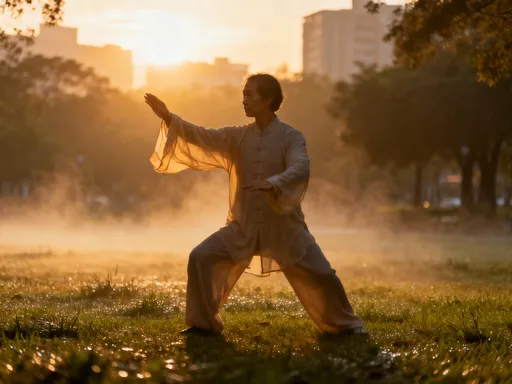
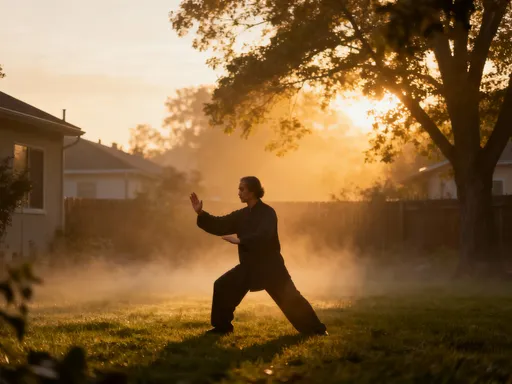
After exploring different forms of qigong, I settled on a short, repeatable sequence that I now do every morning. It takes about ten minutes, fits into even the busiest schedule, and leaves me feeling centered and alert. The routine begins with *zhan zhuang*, or “standing like a tree.” This is a foundational practice in qigong, where you stand still with feet shoulder-width apart, knees slightly bent, arms rounded as if hugging a large ball. The goal isn’t to do anything dramatic—it’s to become present. I focus on my breath, letting it deepen naturally, and scan my body for tension. Even this simple act helps reset my nervous system before the day begins.
Next, I move into three gentle exercises. The first is called “lifting the sky.” With slow, deliberate motions, I raise my hands from the lower abdomen up through the center of the body, palms turning upward as they reach overhead, then slowly lowering them back down. This movement stimulates the central meridian and encourages deep diaphragmatic breathing. The second is “wave hands like clouds,” a flowing side-to-side motion that gently stretches the torso and improves spinal mobility. It also activates the liver and gallbladder meridians, which in TCM are linked to emotional regulation and detoxification.
The third movement is “shaking the body,” a light, rhythmic bounce on the balls of the feet while allowing the arms and torso to relax and vibrate. This may look unusual, but it’s incredibly effective at releasing tension and improving circulation. I do this for about one minute, letting the vibrations travel through my joints and muscles. The entire sequence is low-impact, safe for all fitness levels, and adaptable—if I’m feeling stiff, I shorten the movements; if I have more time, I repeat them. The key isn’t intensity, but regularity. Over the years, this routine has become as essential to me as brushing my teeth—a non-negotiable part of my morning.
The Science Behind the Stillness: What Research Says
While qigong has been practiced for centuries, it’s only in recent decades that Western science has begun to study its effects. What researchers are finding is both promising and validating. Multiple peer-reviewed studies have shown that regular qigong practice can lead to measurable improvements in physical and mental health. One area of strong evidence is stress reduction. A 2013 meta-analysis published in the journal *PLOS ONE* found that qigong significantly reduced cortisol levels, the hormone associated with chronic stress. Lower cortisol means better sleep, improved digestion, and a stronger immune response.
Cardiovascular health is another area where qigong shows benefit. A 2015 review in the *Journal of Hypertension* reported that participants who practiced qigong for 12 weeks experienced modest but consistent reductions in blood pressure. For individuals managing prehypertension or early-stage hypertension, this could delay or reduce the need for medication. Additionally, studies have shown improvements in heart rate variability (HRV), a marker of nervous system resilience. Higher HRV is linked to better stress adaptation and lower risk of heart disease.
Immune function also appears to improve with regular practice. Research from the University of Florida found that older adults who practiced qigong for eight weeks showed increased activity in natural killer cells, which play a key role in fighting infections and abnormal cells. Another study measured reductions in oxidative stress markers—molecules that contribute to aging and chronic disease. These changes didn’t happen after a single session, but accumulated over weeks and months of consistent practice. This reinforces a central truth: qigong isn’t about quick fixes. It’s about creating gradual, lasting improvements in the body’s internal environment.
Building the Habit: How to Stick With It Without Burning Out
Starting a new habit is often easier than maintaining it. I’ve tried many wellness practices over the years—juice cleanses, intense workouts, meditation apps—but most didn’t last. What made qigong different was its simplicity and flexibility. I didn’t need special equipment, a gym membership, or even a lot of space. All I needed was ten quiet minutes and the willingness to show up. Still, there were mornings when I felt too tired, too busy, or too skeptical to practice. The key to consistency wasn’t willpower—it was strategy.
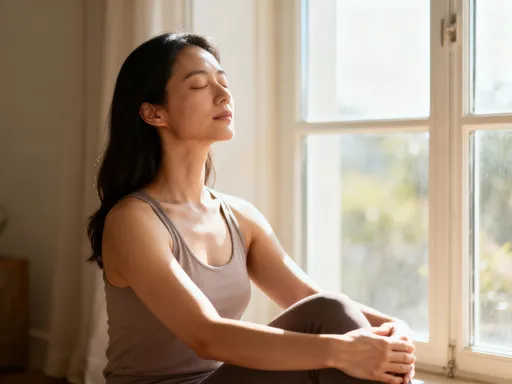
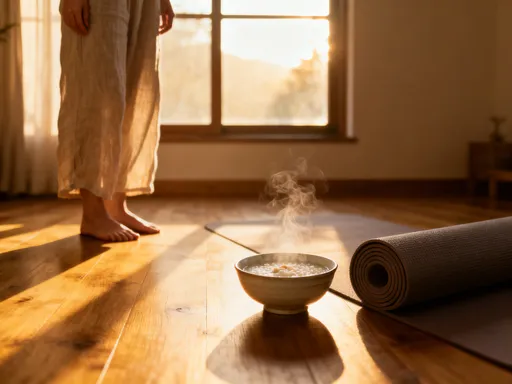
I began by anchoring qigong to an existing habit: brushing my teeth. Right after, while still in my bathroom or nearby living area, I would step into my routine. This “habit stacking” made it automatic, not optional. I also created a dedicated space—a corner of my living room with a small mat and a candle. Having a physical cue helped signal to my brain that it was time to focus. I experimented with timers and journals, but what worked best was shifting my mindset. Instead of thinking, “I have to do this,” I began saying, “I get to do this.” That small change transformed qigong from a chore into a gift.
I also learned to let go of perfection. Some days, I only did five minutes. Other days, I skipped a movement. But I discovered that even a partial practice had value. The goal wasn’t flawless execution—it was showing up. Over time, the habit deepened. Now, if I miss a morning, I feel the difference. My body feels heavier, my mind more scattered. That natural feedback loop has become its own motivation. For anyone starting out, I recommend starting even smaller—three minutes is enough. The important thing is to begin, stay gentle with yourself, and let the practice grow at its own pace.
Qigong as a Lifestyle: Beyond the Morning Routine
One of the most surprising benefits of qigong has been how it extended beyond the ten minutes of practice. Its principles began influencing how I moved, breathed, and responded to stress throughout the day. I noticed myself standing taller, breathing deeper during tense moments, and recognizing when my body needed a pause. This increased body awareness is one of qigong’s quiet superpowers. It teaches you to listen—to notice the early signs of fatigue, tension, or imbalance before they become problems.
I also found that qigong supported emotional resilience. Life still brings challenges—family concerns, work pressures, unexpected setbacks. But I’ve become better at navigating them without spiraling into anxiety or exhaustion. The practice has cultivated a sense of inner stillness, a quiet center I can return to even in chaos. It hasn’t made me immune to stress, but it has given me tools to manage it more gracefully. I’ve also connected with a small local group of practitioners, meeting monthly to share experiences and support each other. While I still practice alone most days, that sense of community has added a layer of encouragement and accountability.
More than just a physical exercise, qigong has become a philosophy of care—a daily reminder that health is not something we fix when broken, but something we nurture every day. It aligns with the values many women in their 30s to 50s hold deeply: taking care of others while also honoring their own well-being. It doesn’t demand hours or dramatic changes. It simply asks for a few minutes of presence, breath, and intention. And in that space, something quiet but powerful begins to grow.
Small Movements, Lasting Strength
Qigong will not replace medical treatment, and it is not a miracle cure. But for long-term wellness, it has proven to be one of the most reliable tools I’ve ever used. It taught me that true strength isn’t built through intensity, but through consistency. It’s not about dramatic transformations, but about small, daily acts of care that accumulate over time. After more than ten years of practice, I feel more grounded, more energized, and more in tune with my body than I did in my younger years.
The beauty of qigong lies in its accessibility. It doesn’t require special skills, physical strength, or financial investment. It’s safe for nearly everyone, adaptable to any lifestyle, and supported by both tradition and science. If you’ve ever felt overwhelmed by complex health advice or discouraged by routines that didn’t stick, qigong offers a different path—one rooted in gentleness, awareness, and sustainability. Start with just a few minutes. Focus on your breath. Move with intention. Let time do the work. In a world that often feels rushed and demanding, this simple practice can be a quiet act of self-respect—a way to stay strong, not by pushing harder, but by showing up, gently and consistently, for yourself.