Why Qigong Just Might Be the Body Maintenance Hack Science Can’t Ignore
Have you ever felt worn down by daily stress, yet unsure how to truly recharge? I started exploring qigong after hitting a wall with conventional workouts. What began as curiosity turned into a game-changer. Backed by growing scientific interest, qigong isn’t mystical—it’s a practical system for body maintenance. This is my journey into how gentle movement and breath can create real, measurable shifts in energy, balance, and resilience—no magic, just science-friendly self-care worth trying.
The Modern Body’s Silent Struggle
Modern life places relentless demands on the human body. From prolonged sitting and screen exposure to emotional stress and irregular sleep, the cumulative toll manifests not in sudden injury but in a slow erosion of physical well-being. Many people accept fatigue, stiffness, and low-grade aches as inevitable parts of aging or busy schedules. Yet these symptoms are not normal—they are signals of a system out of balance. The body is designed for movement, rhythm, and recovery, but contemporary lifestyles often prioritize output over restoration. Without deliberate attention, the musculoskeletal system begins to compensate: shoulders round forward, breathing becomes shallow, and muscles hold chronic tension. These patterns contribute to poor posture, decreased mobility, and increased susceptibility to pain.
What makes this decline particularly insidious is its invisibility. Unlike a sprained ankle or a fever, the effects of long-term physiological strain do not announce themselves with urgency. Instead, they build silently, altering how the body functions at a foundational level. Research has linked chronic stress and physical inactivity to elevated levels of inflammation, disrupted hormone regulation, and reduced heart rate variability—all markers of diminished resilience. The body remains in a low-grade state of alert, never fully switching into rest-and-digest mode. Over time, this imbalance affects everything from immune function to mental clarity. The result is a population that is physically active in some ways but metabolically and neurologically fatigued.
The good news is that this trajectory is not fixed. The human body possesses an extraordinary capacity for self-regulation when given the right conditions. Emerging health paradigms emphasize the importance of nervous system balance, interoception (the ability to sense internal bodily states), and rhythmic physiological functioning. Practices that support these systems do not require drastic lifestyle changes or extreme effort. Instead, they rely on consistency, awareness, and gentle input. This is where qigong enters the picture—not as a cure-all, but as a sustainable method for restoring the body’s natural rhythms and preventing the slow drift toward dysfunction.
What Exactly Is Qigong? (And What It’s Not)
Qigong (pronounced “chee-gong”) is a mind-body practice rooted in traditional Chinese health systems, with a history spanning thousands of years. At its core, qigong integrates slow, intentional movements, controlled breathing, and focused attention to support the body’s self-regulating functions. The term combines *qi*, often described as vital life force or bioenergetic flow, and *gong*, meaning cultivation or practice. While the concept of *qi* may sound abstract, modern science interprets it through measurable physiological processes such as oxygenation, circulation, and autonomic nervous system activity. In practical terms, qigong is less about generating energy and more about optimizing how the body uses and distributes it.
It is important to clarify what qigong is not. It is not a martial art performance, nor is it a religious ritual or mystical practice. While some forms of qigong have been adapted for martial or spiritual purposes, the health-focused versions used in clinical and wellness settings are grounded in biomechanics and neurophysiology. Unlike high-intensity interval training or endurance sports, qigong does not aim to push physical limits. There is no sweat, no strain, and no competition. Its power lies not in exertion but in precision—small adjustments in posture, breath, and attention that yield outsized effects over time.
Think of qigong as a form of internal tuning. Just as a musician adjusts the tension of strings to produce harmonious sound, qigong practitioners make subtle corrections to posture and breath to improve internal alignment and flow. These micro-adjustments influence muscle tone, joint positioning, and respiratory efficiency. Over time, this leads to improved coordination, reduced physical tension, and enhanced body awareness. The practice is accessible to nearly everyone, regardless of age or fitness level, because it meets the body where it is—no special equipment, gym membership, or prior experience required. Its simplicity is part of its strength.
The Science Behind the Stillness
In recent years, qigong has attracted growing attention from the scientific community. Once dismissed as alternative or anecdotal, it is now being studied in controlled trials and integrated into hospital-based wellness programs. The findings are compelling. Multiple studies have demonstrated that regular qigong practice leads to measurable improvements in markers of stress, balance, and physical function. One consistent finding is its effect on cortisol, the primary stress hormone. Participants who practice qigong for as little as 12 weeks show significant reductions in cortisol levels, indicating a shift toward a calmer physiological state.
Equally important is qigong’s impact on the autonomic nervous system. The body operates on a dual system: the sympathetic branch, responsible for fight-or-flight responses, and the parasympathetic branch, which governs rest, digestion, and recovery. Chronic stress keeps the sympathetic system dominant, leading to fatigue, poor sleep, and heightened pain sensitivity. Qigong, through its emphasis on slow, diaphragmatic breathing and mindful movement, activates the parasympathetic system. This shift is reflected in improved heart rate variability (HRV), a key indicator of cardiovascular health and stress resilience. Higher HRV is associated with better emotional regulation, faster recovery, and lower risk of chronic disease.
Neuroimaging studies add another layer of evidence. Functional MRI scans of individuals practicing qigong show increased activity and connectivity in brain regions associated with body awareness, such as the insula and prefrontal cortex. This suggests that qigong enhances interoception—the ability to perceive internal bodily signals like tension, breath depth, and muscle fatigue. Better interoception leads to earlier detection of physical imbalances, allowing for timely correction before they escalate into pain or injury. A 2022 meta-analysis published in the *Journal of Integrative Medicine* reviewed 18 clinical trials and found that participants who practiced qigong for 20 minutes daily experienced significant improvements in balance, joint flexibility, and perceived energy levels—especially among adults aged 40 to 65.
These benefits are not the result of dramatic transformation but of consistent, cumulative change. The body responds to rhythm and repetition. Just as brushing your teeth daily prevents dental decay, daily qigong practice helps maintain physiological harmony. The mechanisms are well within the bounds of known science: improved oxygen delivery, reduced muscle guarding, and enhanced nervous system regulation. There is no need to invoke the supernatural—qigong works because it aligns with how the body naturally functions when given the chance to reset.
Why the Body Needs Maintenance, Not Just Repair
Most modern fitness models are built on a mechanical metaphor: the body is a machine that must be pushed to its limits to grow stronger. This paradigm emphasizes breakdown and recovery—lift heavy weights to tear muscle fibers, then rest so they rebuild bigger and stronger. While effective for building strength and endurance, this approach often neglects the body’s need for ongoing calibration. Unlike a car or appliance, the human body is not a static machine but a dynamic, self-regulating system. It requires continuous fine-tuning to function optimally. Yet, in the absence of acute injury, most people do not engage in preventive physical care. They wait until pain or dysfunction arises before seeking intervention—by which time compensation patterns are deeply ingrained.
Qigong offers a different philosophy: maintenance over repair. Instead of waiting for problems to emerge, it supports the body’s innate ability to stay in balance. Consider the analogy of a piano. Even if it is not broken, a piano that is not tuned regularly will sound increasingly off-key. The same is true for the body. Poor posture, shallow breathing, and chronic tension distort alignment and reduce efficiency. Over time, these distortions lead to joint strain, reduced range of motion, and increased energy expenditure for simple tasks. Qigong acts as a tuning mechanism, using gentle movement and breath to restore alignment, improve circulation, and release unnecessary muscular tension.
One of the most underappreciated aspects of qigong is its effect on proprioception—the body’s ability to sense its position in space. Poor proprioception contributes to clumsiness, falls, and inefficient movement patterns. By encouraging slow, deliberate motion and heightened awareness, qigong sharpens this internal feedback system. Practitioners learn to detect subtle imbalances—such as uneven weight distribution or shoulder elevation—before they lead to discomfort. This proactive awareness reduces the risk of overuse injuries and supports graceful aging. Moreover, because qigong does not rely on intensity, it can be practiced daily without risk of overtraining, making it ideal for long-term sustainability.
Simple Practices, Real Results
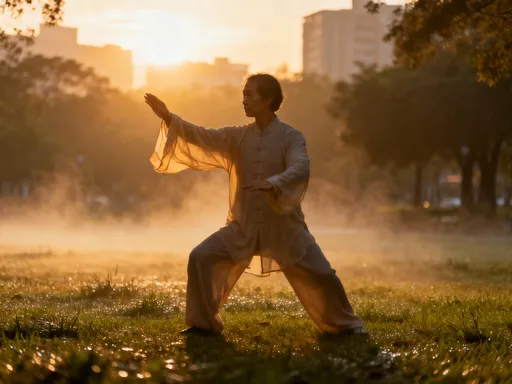
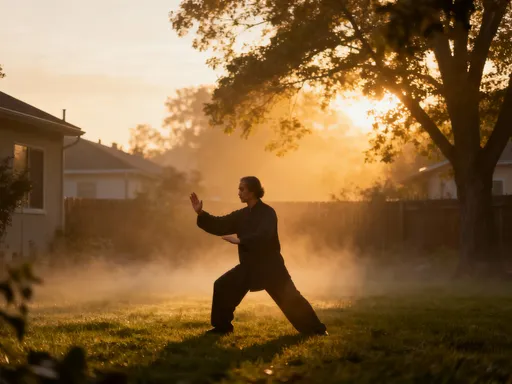
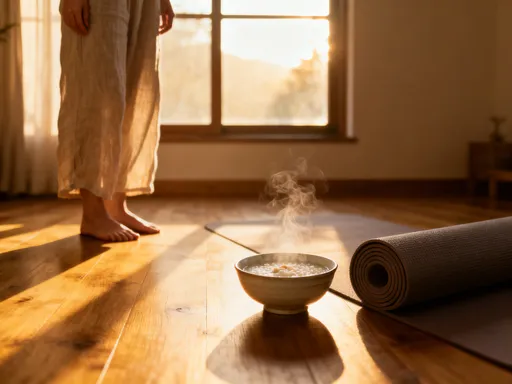
The beauty of qigong lies in its accessibility. You do not need special clothing, equipment, or a large space to begin. Two foundational practices—Standing Like a Tree (Zhan Zhuang) and the Eight Brocades (Ba Duan Jin)—have been studied extensively and are widely recommended for beginners. Standing Like a Tree involves standing with feet shoulder-width apart, knees slightly bent, spine elongated, and arms rounded in front of the body as if embracing a large ball. The focus is on deep, abdominal breathing and maintaining relaxed awareness for 5 to 10 minutes. Though it appears passive, this stance engages core stability, improves posture, and calms the nervous system.
Research supports its effectiveness. A 2020 study published in *Complementary Therapies in Clinical Practice* found that participants who practiced Zhan Zhuang for eight weeks reported significant reductions in lower back pain and improvements in balance. The practice encourages the body to release habitual tension, particularly in the neck, shoulders, and lower back. Because it requires minimal movement, it is safe for individuals with joint concerns or limited mobility. Many practitioners describe it as “resetting” their posture, noticing that after regular practice, they stand taller and move with less effort.
The Eight Brocades is a sequence of eight gentle movements, each targeting specific areas of the body. These include stretching the spine, opening the chest, massaging internal organs through motion, and improving coordination. Originally developed in ancient China for health preservation, modern studies confirm its benefits. A randomized controlled trial involving middle-aged adults found that those who practiced the Eight Brocades three times per week for 12 weeks showed measurable improvements in lung capacity, shoulder mobility, and perceived energy levels. Unlike fast-paced exercise, these movements are performed slowly and with intention, allowing the body to relearn efficient movement patterns.
Results often appear within weeks. Common early benefits include deeper sleep, reduced muscle tension, and a greater sense of calm. Because the practice is low-impact and non-competitive, adherence is high. Unlike intense workouts that may feel like a chore, qigong is often described as restorative—a welcome pause in a busy day. The key is consistency. Practicing for just five to ten minutes daily yields more benefit than longer, infrequent sessions. Over time, the body begins to integrate these patterns, leading to lasting improvements in posture, breathing, and physical ease.
Integrating Qigong Into Daily Life
One of the greatest barriers to wellness practices is the perception that they require extra time. Qigong challenges this notion by fitting seamlessly into existing routines. You do not need to carve out a special hour or travel to a studio. Instead, qigong can be woven into the natural pauses of the day. Try practicing Standing Like a Tree while waiting for your morning coffee to brew. Use a few minutes during a work break to perform one or two movements from the Eight Brocades. Before bed, engage in slow, mindful breathing to signal to your body that it is time to rest.
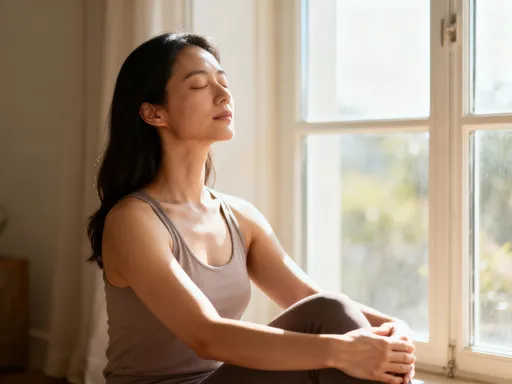
The goal is not perfection but presence. Even three minutes of intentional breathing—focusing on slow inhales through the nose and extended exhales through the mouth—can shift the nervous system from stress to calm. This simple act reduces heart rate, lowers blood pressure, and clears mental fog. Compared to scrolling through a phone during downtime, which often increases mental load, a brief qigong practice restores energy. Over time, these micro-moments accumulate, reinforcing a state of balance rather than reactivity.
Technology can support the practice without replacing its essence. Guided audio or video sessions are available through reputable wellness platforms and can be helpful for beginners. However, the core of qigong lies in internal awareness, not external instruction. As you become more familiar with the movements and breath patterns, you can practice independently, tuning into your body’s signals. The practice evolves from something you “do” to a way of being—more attentive, more grounded, more in tune with your physical self.
For families, qigong can become a shared ritual. Parents and children can practice simple breathing exercises together before bedtime. Couples can use gentle stretches to reconnect after a long day. Because it is non-athletic and non-intimidating, it invites participation without pressure. In this way, qigong becomes not just a personal habit but a lifestyle choice that supports collective well-being.
A Sustainable Path to Long-Term Resilience
In a culture obsessed with speed, intensity, and visible results, qigong offers a quiet counterbalance. It does not promise overnight transformation or dramatic weight loss. Instead, it invites a return to the basics of human physiology: rhythmic breathing, mindful movement, and nervous system regulation. Its power lies in its gentleness, its accessibility, and its sustainability. While high-intensity workouts have their place, they are not designed for daily use by everyone. Qigong, on the other hand, can be practiced every day, regardless of age, fitness level, or physical condition.
More than just a physical practice, qigong fosters a mindset of care and attention. It teaches that the body is not an obstacle to overcome but a partner to listen to. In doing so, it shifts the focus from achievement to presence, from striving to being. This perspective is especially valuable for women in their 30s to 55s, who often navigate multiple roles—caregiver, professional, partner, parent—while managing their own health needs. Qigong provides a space to pause, recalibrate, and restore without guilt or pressure.
As scientific research continues to validate its benefits, qigong is gaining recognition as a legitimate component of preventive health care. Hospitals, rehabilitation centers, and wellness clinics are incorporating it into programs for chronic pain, stress management, and aging support. It is not a replacement for medical treatment or conventional exercise, but a complementary practice that enhances recovery, improves body awareness, and builds resilience over time.
The message is clear: the body maintains itself best when we stop fighting it and start listening. Qigong is not about doing more—it’s about doing differently. It is a daily act of alignment, a quiet commitment to self-care that pays dividends in energy, balance, and well-being. In a world that never stops moving, sometimes the most powerful thing we can do is stand still, breathe deeply, and remember how to be at home in our own bodies.