Why Tai Chi Works: My Science-Backed Journey to Smarter Health Management
You don’t need extreme workouts to feel stronger and more balanced—sometimes, the quietest moves make the loudest difference. I started tai chi out of curiosity, not expectation, and within weeks, I noticed real shifts: better posture, less tension, sharper focus. It wasn’t magic—it was science. This isn’t just about slow motion; it’s about smart health management. Let me walk you through what research says and how small, daily practices can quietly transform your well-being from the inside out.
The Hidden Power of Slow Movement
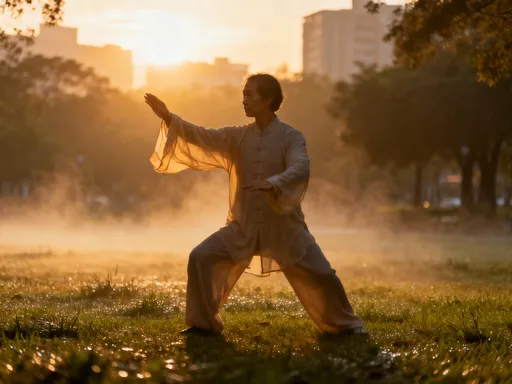
At first glance, tai chi may appear too gentle to deliver real health benefits. Movements flow like water, transitions are smooth, and effort seems minimal. But beneath this calm surface lies a powerful physiological response. The paradox of tai chi is that its softness is precisely what makes it effective. Unlike high-intensity training that stresses the body to build strength, tai chi strengthens through precision, awareness, and neuromuscular coordination. What many dismiss as “waving arms” is actually a finely tuned system of weight shifting, balance control, and breath synchronization that activates deep muscle groups and stabilizes the core.
For decades, scientists overlooked tai chi, assuming its effects were placebo-driven or limited to relaxation. However, modern research has begun to dismantle these misconceptions. Studies conducted by the National Institutes of Health and published in journals such as Journal of the American Geriatrics Society have demonstrated that older adults who practiced tai chi for just 12 weeks experienced a 47% reduction in fall risk compared to control groups. This is not due to increased muscle mass but improved proprioception—the body’s ability to sense its position in space. By training balance through slow, deliberate motions, the nervous system becomes more responsive, reducing instability that often leads to injury.
What’s more, tai chi engages the body in ways that mirror functional daily movements—rising from a chair, turning, reaching, and walking. These actions are rehearsed with control, enhancing joint mobility and muscle coordination without strain. Unlike repetitive gym exercises, tai chi promotes full-body integration, where every movement connects the feet to the hands through the spine. This holistic engagement helps prevent the imbalances that lead to chronic pain and postural decline. As researchers continue to explore the biomechanics behind tai chi, one truth emerges: gentleness does not mean weakness. In fact, it may be the most intelligent form of physical training available.
Today, advanced tools like motion capture and brain imaging are revealing how tai chi influences both body and mind at a fundamental level. These technologies show that even subtle movements generate significant neural feedback, improving motor learning and body awareness. The ancient practice, once viewed as mystical or merely meditative, is now being validated by empirical data. This convergence of tradition and science opens a new understanding of health—not as something achieved through force, but cultivated through mindful movement.
What Science Says About Tai Chi’s Impact on the Body
Tai chi is not cardiovascular exercise in the traditional sense, yet it delivers measurable improvements in heart health, circulation, and metabolic function. Research from Harvard Medical School has shown that regular tai chi practice can lower systolic blood pressure by an average of 10 to 15 mm Hg in individuals with mild hypertension. These changes are comparable to those achieved through moderate aerobic activity, but without the joint impact or physical strain. The reason lies in tai chi’s unique combination of rhythmic movement and diaphragmatic breathing, which together enhance vascular elasticity and reduce sympathetic nervous system activity—the system responsible for stress-related spikes in blood pressure.
Beyond cardiovascular benefits, tai chi supports musculoskeletal health in profound ways. A study published in the Arthritis Care & Research journal found that participants with knee osteoarthritis who practiced tai chi twice weekly for 12 weeks reported less pain and greater physical function than those in standard physical therapy groups. The slow, weight-bearing motions strengthen connective tissues, improve joint lubrication, and increase range of motion—all critical factors in managing degenerative conditions. Because the movements are low-impact and self-paced, they are accessible even to those with limited mobility or chronic pain.
Another key benefit is tai chi’s effect on inflammation. Chronic low-grade inflammation is linked to numerous health issues, including heart disease, diabetes, and autoimmune disorders. Emerging evidence suggests that tai chi can reduce inflammatory markers such as C-reactive protein (CRP) and interleukin-6 (IL-6). Scientists believe this anti-inflammatory effect stems from the practice’s ability to regulate the body’s stress response. By promoting parasympathetic dominance—the “rest and digest” state—tai chi helps reset the immune system’s reactivity, preventing it from remaining in a constant state of alert.
These physiological changes are not immediate, nor are they dramatic in the way a weight-loss program might show results. Instead, they accumulate quietly over time, building resilience from within. This makes tai chi particularly effective for long-term health management. Unlike fitness trends that promise quick transformations, tai chi works beneath the surface, supporting internal systems that are often neglected in conventional exercise routines. It is not about pushing limits, but about restoring balance—between movement and stillness, effort and ease, tension and release. For women in their 30s to 50s managing household demands, career responsibilities, and personal well-being, this kind of sustainable, gentle conditioning offers a practical path to lasting vitality.
How Tai Chi Rewires the Brain (Backed by Neurology)
The benefits of tai chi extend far beyond the physical body—they reach deep into the brain. Neuroimaging studies using MRI technology have revealed that individuals who practice tai chi regularly show increased gray matter density in regions associated with attention, emotional regulation, and motor control. One landmark study from the University of Illinois found that after six months of tai chi practice, older adults exhibited growth in the prefrontal cortex and hippocampus—areas crucial for memory, decision-making, and learning. These changes were not observed in control groups engaging in stretching or education-only programs, suggesting that the mind-body coordination inherent in tai chi drives neuroplasticity.
Neuroplasticity refers to the brain’s ability to reorganize itself by forming new neural connections throughout life. Tai chi enhances this process by combining movement with focused attention. Each form requires precise timing, spatial awareness, and breath control, creating a cognitive workout that challenges the brain in ways few other activities do. This dual-task training—moving while maintaining mental clarity—mirrors real-life demands, such as multitasking during daily routines or staying calm under pressure. Over time, the brain becomes more efficient at managing complexity, leading to improved mental clarity and reduced cognitive fatigue.
For women navigating the transitions of midlife—whether hormonal shifts, parenting responsibilities, or career changes—emotional resilience is essential. Tai chi has been shown to reduce symptoms of anxiety and depression by modulating activity in the amygdala, the brain’s fear center. When practiced consistently, it helps regulate emotional responses, allowing individuals to respond to stressors with greater calm and perspective. This is not merely subjective relief; functional MRI scans confirm decreased amygdala reactivity in long-term practitioners.
Perhaps most promising is tai chi’s role in preventing cognitive decline. A meta-analysis published in the Journal of Alzheimer’s Disease concluded that mind-body exercises like tai chi were associated with a 30% lower risk of developing mild cognitive impairment. While no single practice can guarantee protection against neurodegenerative diseases, tai chi offers a proactive strategy rooted in daily habit. It fosters what researchers call “cognitive reserve”—the brain’s resilience to damage—by keeping neural networks active and adaptable. In this way, tai chi is not just movement; it is mental maintenance, a form of lifelong brain hygiene that supports sharp thinking and emotional balance well into later years.
Why It’s More Than Just Exercise—It’s Health Management
Tai chi transcends the label of “exercise” because it functions as a comprehensive system of self-regulation. While most fitness routines focus on burning calories or building muscle, tai chi emphasizes awareness, rhythm, and internal balance. It is not about achieving a certain look or performance metric, but about cultivating a state of coherence between body and mind. This makes it uniquely suited for preventive health care, especially for individuals managing chronic conditions or seeking sustainable wellness strategies.
Compared to high-impact workouts, tai chi carries minimal risk of injury. There is no jumping, no sudden exertion, and no need for specialized equipment. A person can practice in slippers on a living room floor, making it one of the most accessible forms of physical activity available. Its adaptability allows it to serve diverse needs: someone recovering from surgery can perform seated versions, while another person may use it to complement cardiac rehabilitation. This inclusivity is rare in the fitness world, where many programs assume a baseline level of strength or mobility that not everyone possesses.
What sets tai chi apart is its emphasis on consistency over intensity. Modern health science increasingly recognizes that small, repeated actions yield greater long-term benefits than sporadic bursts of effort. Tai chi aligns perfectly with this principle. Practicing just 10 to 15 minutes a day can lead to measurable improvements in balance, mood, and energy levels. Over months, these small investments compound into significant health gains. For busy women juggling family, work, and personal care, this low-time, high-return model is ideal.
Real-world examples illustrate its impact. Clinical trials have shown that breast cancer survivors who practiced tai chi reported better sleep quality, reduced fatigue, and improved quality of life. Individuals with fibromyalgia experienced decreased pain sensitivity and greater emotional well-being. Even those with Parkinson’s disease showed improved gait stability and reduced tremor severity after consistent practice. These outcomes are not miraculous; they are the result of a practice that supports the body’s natural healing mechanisms. By lowering stress hormones, improving circulation, and enhancing neural communication, tai chi creates the internal conditions for recovery and resilience.
Breaking Down the Core Principles (And How to Actually Do It)
Tai chi is built on four foundational elements: weight shifting, spinal alignment, diaphragmatic breathing, and mindful intention. Understanding these components makes the practice more accessible and effective, even for beginners. Weight shifting involves smoothly transferring body weight from one leg to the other, which trains balance and leg strength. Think of it as walking in slow motion, where each step is deliberate and grounded. This not only improves stability but also increases circulation to the lower extremities, reducing swelling and fatigue.
Spinal alignment is equally important. In tai chi, the spine is kept upright and elongated, like a stack of coins or a coiled spring ready to release energy. This posture reduces strain on the lower back and allows for freer movement of the diaphragm. Many people spend hours sitting, which compresses the spine and restricts breathing. Tai chi counteracts this by encouraging verticality and core engagement, leading to better posture and reduced neck and shoulder tension.
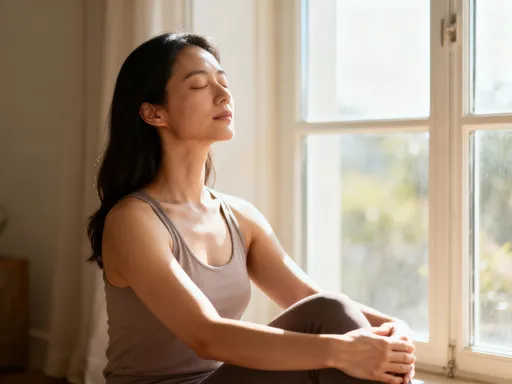
Diaphragmatic breathing—deep, belly-centered breaths—coordinates with movement to create a natural rhythm. Inhaling during expansion, exhaling during contraction, this pattern synchronizes the nervous system and promotes relaxation. When practiced regularly, it becomes a tool for managing stress in daily life. For instance, a woman feeling overwhelmed after a long day can use a few minutes of tai chi breathing to reset her nervous system before stepping into evening responsibilities.
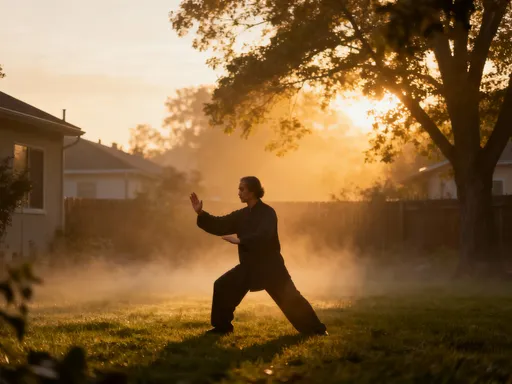
Mindful intention refers to the mental focus required during practice. Each movement is performed with purpose, not on autopilot. This cultivates present-moment awareness, similar to meditation but in motion. Beginners can start with simple routines, such as the “Wave Hands Like Clouds” or “Parting the Horse’s Mane” forms, which involve gentle arm sweeps and weight transfers. Just five minutes a day, done in a quiet corner of the home, can yield noticeable benefits. Online videos, community classes, or guided apps can support learning without pressure. The key is regularity, not perfection.
Common Challenges and How to Overcome Them
One of the most common barriers to starting tai chi is skepticism. Many people assume that because the movements are slow, they cannot be effective. Yet, research shows that tai chi improves neuromuscular efficiency—the brain’s ability to communicate with muscles—more effectively than static exercises. The slow pace allows for greater control, enabling the body to relearn proper movement patterns. Over time, this leads to stronger, more coordinated muscles and joints, even without traditional resistance training.
Motivation can also be a challenge, especially when results are subtle. Unlike weight loss or muscle gain, the benefits of tai chi often appear gradually—better sleep, fewer headaches, improved digestion. To stay consistent, it helps to track small wins. Keeping a simple journal to note changes in energy, mood, or physical comfort can reinforce commitment. Some find success by pairing tai chi with another daily habit, such as morning tea or post-dinner cleanup, turning it into a ritual rather than a chore.
Another obstacle is the perception that tai chi requires special knowledge or flexibility. In reality, it is designed for all body types and fitness levels. Modifications exist for every form, and progress is measured by personal improvement, not comparison. Joining a low-pressure class or practicing with a supportive group can reduce feelings of self-consciousness. Many community centers, senior programs, and online platforms offer beginner-friendly instruction with no expectations.
Finally, it’s important to reframe expectations. Tai chi is not a quick fix or a performance goal. It is a practice, like brushing your teeth or drinking water—something done regularly to maintain health. Progress is cumulative, not flashy, and perfectly aligned with the needs of long-term wellness. By embracing this mindset, women can integrate tai chi into their lives not as another task, but as a source of calm, strength, and self-care.
Building a Personalized Tai Chi Routine for Long-Term Success
Creating a sustainable tai chi practice begins with setting realistic goals based on time, space, and personal needs. For most women, a 10- to 15-minute daily session is both achievable and effective. This can be split into two shorter segments—morning for energy, evening for relaxation. The key is consistency, not duration. Even on busy days, five minutes of mindful movement can reset the nervous system and improve focus.
A home practice requires minimal space—about the size of a yoga mat—and no equipment. Comfortable clothing and non-slip footwear or bare feet are sufficient. Beginners should start with basic forms and gradually build complexity. Using a mirror can help with alignment, and recording progress through notes or short videos can provide motivation. Some prefer following structured programs through apps or DVDs, while others enjoy the social aspect of group classes.
Weekly deeper sessions—20 to 30 minutes—can enhance benefits by allowing more time for flow and breath integration. These longer practices help deepen body awareness and reinforce neural pathways. It’s also helpful to listen to the body and adjust pace accordingly. Some days may call for energizing movements, while others require gentler, restorative sequences. There is no single “right” way to practice; the best routine is the one that feels sustainable and nourishing.
Ultimately, tai chi is not a trend or a temporary fix. It is a lifelong investment in physical intelligence and self-awareness. By making it a regular part of life, women can build resilience against stress, aging, and chronic illness. It supports not only longevity but quality of life—helping one move with grace, think with clarity, and live with intention. As science continues to validate its benefits, tai chi stands out as one of the most accessible, evidence-based tools for holistic health management.
The convergence of ancient wisdom and modern research reveals a powerful truth: true well-being is not achieved through force, but through mindful, consistent action. Tai chi offers a proven, gentle, and deeply effective path to stronger, smarter living. By embracing its principles, anyone can cultivate resilience—physically, mentally, and emotionally. Small movements today can lead to a healthier, more balanced tomorrow.