Time Travel Through Stone and Sky: Gyeongju’s Living Architecture
Stepping into Gyeongju feels like entering a beautifully preserved chapter of history, where ancient stone meets serene landscapes. This city doesn’t just display Korea’s past—it lives it. From thousand-year-old pagodas to quiet temple courtyards framed by wooden eaves, every structure tells a story. I was struck by how seamlessly tradition blends with daily life, creating moments so visually rich they beg to be captured. Gyeongju isn’t just historic—it’s undeniably *insta-worthy*. Here, time doesn’t merely stand still; it breathes through the trees lining royal tombs, echoes in the footsteps across temple stones, and glows in the golden light that crowns a seated Buddha. For travelers who seek depth, beauty, and authenticity, this city offers a rare gift: the chance to walk through living history.
A City Frozen in Time, Yet Alive Today
Gyeongju, once the capital of the Silla Kingdom that ruled much of the Korean Peninsula from the 1st century BCE to the 10th century CE, stands as one of the most significant historical centers in East Asia. Unlike many ancient capitals reduced to fragments or reconstructions, Gyeongju remains remarkably intact, with over 100,000 cultural relics scattered throughout its urban and rural landscapes. Designated a UNESCO World Heritage site in 2000, the city is often described as an open-air museum—not because it is frozen in isolation, but because its heritage is woven into the rhythm of everyday life. Residents walk past ancient stone guardians on their way to market; children play near burial mounds older than the European Middle Ages; and bicycles glide along paths that once carried royal processions.
What sets Gyeongju apart from other historic cities is its authenticity. There are no artificial recreations or theme-park-like embellishments. The preservation of its architectural legacy stems from centuries of cultural reverence and deliberate conservation efforts. The city’s layout still reflects the geomantic principles of *pungsu*—the Korean adaptation of feng shui—where mountains cradle valleys and rivers flow with quiet purpose. This harmony between nature and human design creates a visual serenity that is both calming and inspiring. For the modern traveler, particularly those who value meaningful experiences over fleeting trends, Gyeongju offers a profound connection to the past without sacrificing comfort or accessibility.
UNESCO recognition has helped safeguard the city’s treasures while also promoting sustainable tourism. Strict zoning laws prevent high-rise buildings from disrupting the skyline, ensuring that no modern structure overshadows the ancient. This careful balance allows visitors to feel immersed in history without the sense of stepping into a staged tableau. Whether you're standing before a moss-covered stone Buddha or sipping tea in a quiet garden, the past feels immediate, tangible, and deeply respectful of the present.
The Quiet Majesty of Bulguksa Temple
Bulguksa Temple, nestled in the foothills of Mount Toham, is not merely a religious site—it is a masterpiece of architectural and spiritual harmony. Constructed in the 8th century during the golden age of the Silla Dynasty, the temple complex was designed to represent the Buddhist utopia on Earth. Its stone terraces, wooden halls, and intricately carved bridges are arranged with mathematical precision, each element symbolizing a step toward enlightenment. The temple’s elevated walkways, built from granite and supported by stone columns, lead visitors upward both physically and metaphorically, creating a journey that mirrors the path to spiritual awakening.
Photographers and visual storytellers are immediately drawn to Bulguksa’s layered composition. The interplay of natural and built elements—wooden eaves against mountain backdrops, stone railings framing autumn foliage, sunlight filtering through latticed windows—creates endless opportunities for compelling imagery. Two of the temple’s most iconic features are the Dabotap and Seokgatap pagodas, standing in quiet contrast to one another. Dabotap, with its elaborate, multi-tiered structure, symbolizes complexity and divine mystery, while Seokgatap, simple and elegant, represents the purity of the historical Buddha. Together, they form a visual dialogue between ornament and restraint, a balance that resonates deeply in both traditional Korean aesthetics and modern design sensibilities.
The temple’s beauty evolves throughout the day. In the early morning, mist rises from the valley, softening edges and lending a dreamlike quality to the stone bridges. By midday, sunlight casts sharp shadows across the granite pathways, emphasizing texture and form. At sunset, the wooden halls glow with a warm, amber hue, their reflections shimmering in nearby ponds. These natural shifts in light require no digital enhancement—what you see through the lens is real, unfiltered, and profoundly moving. For families, especially mothers who cherish moments of peace and reflection, Bulguksa offers a sanctuary where history, nature, and beauty converge.
Seokguram Grotto: Where Mountain Meets Masterpiece
A short climb from Bulguksa lies Seokguram Grotto, a marvel of 8th-century engineering and artistry. Carved directly into the granite face of the mountain, the grotto houses a majestic seated Buddha, facing the East Sea. The journey to the site is part of its magic—winding stone steps through pine forests, the sound of wind in the trees, and the gradual sense of leaving the modern world behind. Upon entering the domed chamber, visitors are met with a moment of stillness. The Buddha, over three meters tall, sits in serene meditation, his face illuminated by natural light that filters through an oval skylight. The effect is both intimate and awe-inspiring, as if the mountain itself has cradled this figure for centuries to protect its wisdom.
The architectural sophistication of Seokguram is extraordinary. The dome, constructed without mortar, uses precisely cut stone blocks that distribute weight evenly, ensuring stability for over 1,200 years. A hidden ventilation system prevents moisture buildup, preserving the sculpture from erosion. These details reflect a deep understanding of both engineering and spiritual symbolism. The grotto is not just a tomb or shrine—it is a carefully designed space meant to facilitate contemplation and connection with the divine. For the visually inclined traveler, the play of light and shadow within the chamber creates a natural spotlight effect, making the Buddha appear to glow from within. This ethereal quality is especially powerful in the early morning, when soft light enhances the sculpture’s gentle expression and the surrounding stone seems to breathe with age and silence.
Photographing Seokguram requires patience and respect. Flash photography is prohibited to protect the delicate surface of the statue, but this limitation encourages a more mindful approach. The absence of artificial light forces visitors to observe, wait, and truly see. For mothers who often move through life at a hurried pace, this space offers a rare invitation to slow down, breathe, and reconnect with inner calm. The images captured here are not just visual records—they are emotional imprints of a moment suspended in time.
Walking Among the Ancestors: Tumuli Park
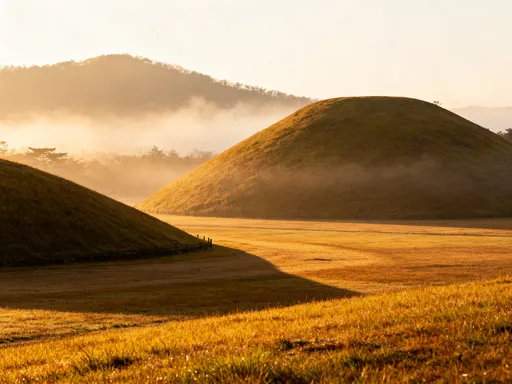
Scattered across the heart of Gyeongju like ancient sentinels, the grass-covered burial mounds of Tumuli Park offer a peaceful contrast to the grandeur of temples and palaces. These dome-shaped tombs, dating back over a thousand years, were built for Silla royalty and elite families. Unlike the imposing pyramids of other civilizations, these mounds blend gently into the landscape, their soft curves echoing the surrounding hills. Over 150 tombs are preserved in the park, though only a few have been excavated—most remain sealed, their contents undisturbed out of respect for ancestral dignity.
The park’s serene atmosphere makes it one of the most photogenic locations in the city. In the early morning, a delicate fog often drapes the mounds, creating a mystical, almost otherworldly scene. During golden hour, the low sun casts long shadows across the grass, emphasizing the mounds’ gentle contours and turning the entire park into a canvas of light and texture. Wide-angle shots capture the scale and spacing of the tombs, while close-ups reveal the intricate patterns of dew-covered grass and wildflowers that bloom seasonally. For social media storytelling, Tumuli Park offers a rare combination of historical depth and visual poetry—a place where the past feels both distant and intimately close.
Walking through the park, one cannot help but reflect on the passage of time and the quiet dignity of memory. The Silla people believed in an afterlife, and these tombs were designed as eternal homes, filled with treasures and personal belongings. Modern visitors, especially those who value family and legacy, may find a deep emotional resonance here. It is a place to honor ancestors, to consider what we leave behind, and to appreciate the continuity of life across generations. The park’s accessibility—flat paths, shaded benches, and clear signage—makes it ideal for travelers of all ages, including families with children or older adults seeking a gentle, meaningful stroll.
Reconstructed Grandeur: Cheomseongdae and Anapji Pond
Among Gyeongju’s most iconic landmarks are Cheomseongdae and Anapji Pond, two sites that showcase the scientific and aesthetic sophistication of the Silla Dynasty. Cheomseongdae, believed to be the oldest surviving astronomical observatory in East Asia, is a striking stone structure shaped like a bottle. Built in the 7th century, it stands about nine meters tall and consists of 362 granite blocks—some interpret this number as symbolizing the days of the year. Its design allowed ancient astronomers to track the movements of the sun, moon, and stars, marking solstices and guiding agricultural cycles. Today, the observatory stands as a testament to early scientific inquiry, its simple yet powerful form drawing admiration from architects and history enthusiasts alike.
Nearby, Anapji Pond offers a different kind of beauty—one rooted in royal leisure and poetic design. Originally part of the Silla palace complex, the pond was rediscovered in the 1970s and meticulously restored. Surrounded by pavilions, stone bridges, and carefully placed boulders, the water creates perfect reflections, especially at dusk when lanterns are lit along the banks. The symmetry of the layout, combined with the seasonal changes in foliage—cherry blossoms in spring, lotus flowers in summer, crimson maples in autumn—makes Anapji a favorite for photographers seeking balanced, harmonious compositions. At night, the pond is illuminated in a soft blue glow, transforming it into a dreamlike setting that feels both ancient and timeless.
Together, Cheomseongdae and Anapji Pond represent two sides of Silla culture: intellectual pursuit and artistic refinement. For visitors, they offer a well-rounded experience—intellectual stimulation at the observatory, emotional uplift at the pond. The proximity of the two sites allows for an easy walking tour, ideal for a half-day exploration. Families can enjoy the open spaces, children can run along the paths, and mothers can pause to take in the quiet elegance of a place designed for contemplation and joy. These reconstructed sites prove that history, when treated with care, can be both informative and deeply beautiful.
Hidden Courtyards and Hanok Charm in Yangdong Village
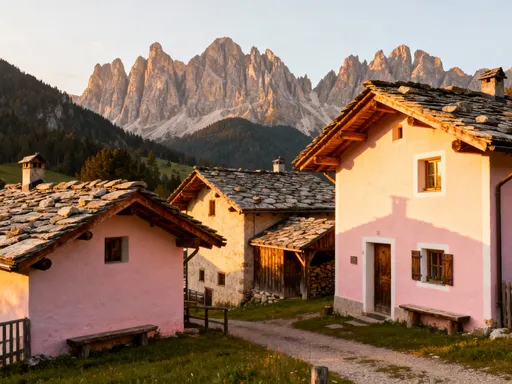
Nestled in the rolling hills northeast of Gyeongju’s center, Yangdong Village is one of Korea’s best-preserved traditional clan villages. Designated as a UNESCO World Heritage site alongside other historic areas of the city, Yangdong offers an unfiltered glimpse into pre-modern Korean life. With over 160 thatched and tiled-roof houses, stone walls, and wooden gates, the village feels like a scene from a historical drama—except it is real, lived-in, and carefully maintained. Unlike tourist-only reconstructions, Yangdong retains a sense of authenticity; some descendants of the original families still reside here, preserving customs and seasonal rituals.
The architectural layout follows traditional *hanok* principles, with houses oriented to face south for optimal sunlight and protected by the mountains to the north. Central to each home is the *madang*, an open courtyard that serves as the heart of family life. These courtyards create natural framing opportunities for photography—the wooden eaves, stone wells, and laundry lines strung with traditional garments all contribute to intimate, storytelling images. Seasonal changes bring new textures: snow dusting the rooftops in winter, wisteria spilling over gates in spring, and golden rice fields surrounding the village in autumn. Each visit offers a different visual narrative, making Yangdong a rewarding destination for repeat travelers.
For mothers who appreciate heritage, family values, and quiet beauty, Yangdong is especially meaningful. The village embodies intergenerational continuity—children learn traditions from elders, homes are passed down through families, and respect for nature and ancestors remains central. Walking its narrow paths, one feels a deep sense of peace and rootedness. There are no souvenir shops or loud advertisements, only the sound of wind in the trees and the occasional call of a rooster. This simplicity is not a lack, but a gift—a reminder that beauty often lies in the ordinary, the enduring, and the unspoken.
Capturing Gyeongju: Tips for the Visually Curious Traveler
For those eager to document their journey through Gyeongju, a few practical tips can enhance both the experience and the results. First, timing is everything. Early morning light, between 6:00 and 8:30 AM, offers the softest illumination, reducing harsh contrasts and bringing out subtle textures in stone and wood. Late afternoon, especially during golden hour, provides warm, flattering light ideal for portraits and landscape shots. Midday sun can be strong, so seek shaded areas or focus on interior spaces like temple halls or grottos during this time.
In terms of equipment, a standard zoom lens (24-70mm) is sufficient for most scenes, while a wide-angle lens (16-35mm) works beautifully for capturing expansive views like Tumuli Park or Anapji Pond’s reflections. A tripod is useful for low-light conditions, especially during evening visits to illuminated sites. However, the most important tool is patience. Some of the most powerful images emerge from waiting—letting a monk walk into frame, capturing the exact moment sunlight touches the Buddha’s face, or photographing a child’s wonder as they see a thousand-year-old stone guardian for the first time.
Respect is paramount. Many sites are active places of worship or ancestral reverence. Always follow posted guidelines: remove shoes when required, avoid loud conversations, and never touch or climb on historical structures. When photographing people, especially monks or residents of Yangdong Village, ask for permission first. These small gestures honor the culture and often lead to more authentic, meaningful interactions.
For a well-rounded experience, consider combining sites into thematic walks. Begin at Bulguksa Temple in the morning, ascend to Seokguram for midday reflection, then descend to Tumuli Park in the afternoon. Alternatively, explore the city center with Cheomseongdae and Anapji Pond in the evening, when lighting enhances their visual impact. Gyeongju is compact and walkable, with reliable public transport and bike rentals available for longer distances.
In the end, the true beauty of Gyeongju lies not just in its stones, roofs, or reflections—but in the way it invites us to see time differently. It reminds us that history is not a distant chapter, but a living presence. For the woman who carries her family’s story, who seeks meaning in everyday moments, and who values beauty that endures—Gyeongju offers a quiet, lasting resonance. It is a place where the past doesn’t whisper—it speaks clearly, gently, and with timeless grace.