You Won’t Believe These Alpine Villages in the Dolomites
Nestled in northern Italy, the Dolomites aren’t just about jaw-dropping peaks—they’re home to villages where stone, wood, and history blend into breathtaking mountain architecture. I’ve wandered these valleys in all seasons, and what surprised me most wasn’t just the scenery, but how every house, barn, and church tells a story of resilience and tradition. This isn’t just travel—it’s a journey into how people live in harmony with one of Europe’s most dramatic landscapes. The way homes are anchored into steep slopes, how barns rise like sentinels above meadows, and how village centers grow organically from centuries of careful planning—all speak to a deep understanding of place. These are not staged sets for tourists, but living, breathing communities shaped by weather, culture, and time. In this article, we’ll explore the soul of these alpine villages, uncovering the wisdom behind their enduring design and discovering how their quiet beauty offers lessons far beyond the mountains.
First Impressions: Architecture That Feels Alive
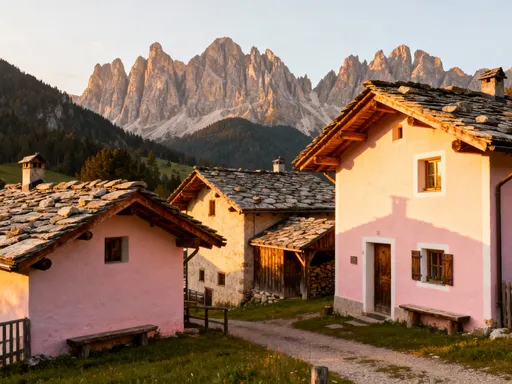
Arriving in a Dolomite valley in the early morning light is like stepping into a painting that breathes. The sun climbs slowly over jagged limestone spires, casting a soft glow on clusters of pastel-hued farmhouses nestled in green meadows or perched on forested slopes. These traditional homes, known locally as *masi*, seem to grow from the earth rather than rest upon it. Their stone walls, built without mortar in many cases, absorb warmth during the day and release it at night, while thick wooden beams cradle steeply pitched roofs designed to shed heavy snow. The color palette—creams, pinks, ochres, and soft grays—echoes the surrounding rock formations, creating a seamless visual harmony between human settlement and natural backdrop.
What strikes the observant traveler is not just the beauty but the intentionality behind every detail. The architecture here is not decorative for its own sake; it is the physical expression of survival, community, and continuity. The Ladin cultural influence, deeply rooted in this region, is evident in the ornate carvings on doorframes, the painted frescoes above entryways, and the careful orientation of buildings to maximize sunlight during long winters. Ladin, a Rhaeto-Romance language still spoken by thousands in the area, carries with it a worldview that values balance, modesty, and connection to the land—values mirrored in the built environment.
Even small features reveal centuries of accumulated knowledge. Hayracks, called *tabiàs*, stand on stilts behind homes, allowing air to circulate through drying grass while protecting it from moisture and rodents. Windows are modest in size to reduce heat loss, yet strategically placed to capture the low winter sun. The use of local materials—larch wood for its natural resistance to rot, dolomite stone for insulation and durability—means that buildings age gracefully, their colors softening with time rather than deteriorating. These are not static relics but living structures, maintained and adapted by families who understand that their homes are part of a larger ecosystem.
The Heart of the Valley: Traditional Masi and Stone Barns
At the center of village life in the Dolomites stands the *maso*, or *maso chiuso*—a self-contained farmstead that once supported entire extended families through the harsh mountain winters. These multi-level structures were designed with remarkable efficiency: the ground floor housed livestock, whose body heat helped warm the living quarters above; the middle level contained the family’s kitchen, sleeping rooms, and storage; and the upper floors stored hay and grain, accessible via external wooden staircases or internal chutes. This vertical arrangement wasn’t just practical—it was essential for survival in a landscape where every resource had to be maximized.
The construction techniques used in these buildings reflect a deep understanding of the local environment. Dry-stone foundations, built without mortar, allow for slight movement during freeze-thaw cycles, preventing cracks and collapse. Timber framing, using locally sourced larch or spruce, creates flexible yet sturdy skeletons that can withstand heavy snow loads. Many homes are partially embedded into hillsides, using the earth as natural insulation and protection from wind. Roofs are covered with thick wooden shingles, often weighted down with stones or logs to prevent them from being lifted by strong alpine gusts. These features, developed over generations, showcase a form of vernacular architecture that is both highly functional and deeply attuned to its setting.
Villages like Ortisei in Val Gardena and Colle Santa Lucia in the heart of the Dolomites exemplify how these traditions have been preserved with care. In Ortisei, where woodcarving has been a celebrated craft for centuries, many *masi* still bear intricate carvings on balconies and eaves, blending artistry with everyday life. Colle Santa Lucia, a Ladin-speaking community surrounded by towering peaks, maintains its historic character through strict building regulations that ensure new constructions follow traditional forms and materials. These villages have embraced tourism, but not at the cost of authenticity. Visitors can walk cobbled lanes and see working farms, not just souvenir shops. The preservation efforts here are not about creating museum pieces but about sustaining a way of life that remains relevant and resilient.
Why This Style Survived: Climate, Culture, and Craft
The endurance of Dolomite architecture is no accident. It is the result of a powerful convergence between environmental necessity, cultural identity, and skilled craftsmanship. The region’s climate is unforgiving—winters bring heavy snowfall, temperatures can plunge below -20°C, and avalanches remain a constant threat in certain areas. In such conditions, buildings must be more than shelter; they must be fortresses against the elements. Every architectural choice—from roof pitch to wall thickness—was shaped by the need for thermal efficiency, structural stability, and long-term durability. Houses were built to last not decades, but centuries, often passed down through generations with minimal major renovations.
Equally important is the role of the Ladin people, an indigenous Romance-speaking community whose presence in the Dolomites dates back over a thousand years. Despite periods of political pressure and cultural assimilation, the Ladins have preserved their language, traditions, and building practices. Their sense of place is deeply embedded in the landscape, and their architecture reflects a worldview that values continuity, humility, and stewardship. Unlike mass-produced developments that impose form on terrain, Ladin buildings respond to it—following the curve of a slope, aligning with the path of the sun, or respecting the flow of meltwater down a mountainside.
Today, a new generation of artisans continues this legacy. Local stonemasons, carpenters, and roofers use hand tools and traditional methods to restore aging *masi*, often working with natural lime mortars, hand-split shingles, and untreated wood. These craftspeople are not merely reconstructing the past; they are adapting it. For example, some restoration projects now incorporate modern insulation beneath historic facades, allowing homes to meet contemporary energy standards without sacrificing appearance. This balance between preservation and progress ensures that the architecture remains not just visible, but viable. It’s a sustainable model—one that respects heritage while embracing the practical needs of modern living.
Modern Alpine Design: When Tradition Meets Innovation
In recent years, a quiet revolution has taken place in Dolomite architecture—one that honors the past while embracing the future. Contemporary architects, many of them locals or deeply familiar with the region, are designing buildings that feel both ancient and new. The guiding principle is continuity: new structures should not dominate the landscape but blend into it, continuing the visual rhythm established by centuries of careful building. This means using local stone, wood, and traditional roof forms, even in modern hotels, homes, and community centers.
One striking example is the rise of eco-conscious lodges that integrate geothermal heating, solar panels, and passive solar design beneath historic-looking facades. These buildings often feature large glass walls that frame mountain views while maintaining thermal efficiency through advanced glazing and insulation. Some architects have reinterpreted traditional elements in fresh ways—using modern steel frames to support massive wooden roofs, or designing open-plan interiors within the footprint of a restored *maso*. The result is architecture that feels rooted, not retrofitted.
In places like Alta Badia and Val di Fassa, new residential developments follow strict guidelines to ensure they complement rather than compete with existing structures. Building heights are limited, roof pitches must match local norms, and exterior materials must be sourced from within the region. Even color choices are regulated to maintain the soft, earthy palette that defines the valley’s aesthetic. These rules are not seen as restrictions but as safeguards—a way to protect the integrity of the landscape and the communities that depend on it. The message is clear: progress does not require erasure. In fact, the most forward-thinking designs are often those that listen to the past.
Where to See the Best Examples: A Curated Journey
For travelers seeking to experience the full richness of Dolomite architecture, a thoughtful itinerary can reveal the diversity and depth of its traditions. Begin in San Candido, a charming village near the Austrian border, where pastel-colored houses with ornate wooden balconies line quiet streets. The town’s central church, with its Romanesque tower and Baroque interior, stands as a testament to centuries of religious and cultural continuity. From here, follow the Rienza River south into Val Pusteria, stopping in small hamlets like Wahlen or Niederdorf, where stone barns dot the hillsides and ancient irrigation channels still feed alpine pastures.
Continue into the heart of the Dolomites via the Great Dolomite Road, a scenic route that connects some of the most architecturally significant villages. In Ortisei, take a guided walking tour focused on Ladin heritage, visiting restored *masi* and workshops where woodcarvers continue a centuries-old tradition. In Colle Santa Lucia, walk the Sentiero delle Cenge, a trail that offers panoramic views of traditional farmsteads clinging to steep slopes. Each village has its own character, yet all share a common language of stone, wood, and slope.
For a deeper dive, visit Alta Badia, where fortified churches and defensive towers speak to a history of border conflicts and communal resilience. The village of La Villa, with its well-preserved historic center, hosts an annual architecture festival that showcases both restoration projects and innovative new builds. Local tourism offices offer cultural itineraries, including self-guided audio tours and family-friendly heritage trails that explain the function and meaning behind traditional features like hayracks and stone cellars.
The best times to visit are late spring (May–June) and early autumn (September–October), when the weather is mild, the valleys are green, and the tourist crowds have not yet peaked. Summer brings hikers and climbers, while winter transforms the region into a ski destination—but for architecture lovers, the shoulder seasons offer the clearest views and the most peaceful exploration. When visiting, look for signs of authenticity: uneven stone walls, hand-carved details, and buildings that follow the natural contour of the land. Avoid developments that feel imposed rather than integrated. The most meaningful experiences often come from quiet observation—watching smoke curl from a stone chimney, hearing the creak of a wooden balcony underfoot, or seeing a farmer repair a roof with hand-split shingles.
Beyond Postcards: Living With the Landscape
To truly understand Dolomite architecture, one must look beyond the photo opportunities and consider the daily life that sustains it. These villages are not open-air museums; they are working communities where people heat their homes with wood, store winter provisions in stone cellars, and maintain century-old roofs with care. Speaking with a local farmer in Colle Santa Lucia, I learned how families still gather in late summer for *malga* season—moving livestock to high-altitude pastures and living in simple mountain huts for weeks at a time. These seasonal rhythms shape not just agriculture but architecture, as buildings must support both permanent and temporary ways of living.
One morning, I watched an elderly woman arrange firewood in a precise stack beside her home, explaining that the wood must be cut in winter, split in spring, and left to dry all summer to burn cleanly in winter. Her home, a restored *maso* with a steep larch-shingle roof, had been in her family for over 200 years. “We don’t fix things just to look nice,” she said. “We fix them so they last.” This mindset—of care, patience, and respect for materials—is at the heart of the region’s architectural resilience.
Even today, snow load is a serious concern. Residents regularly clear roofs after heavy storms, using long poles or climbing up with ropes. Barns are reinforced every few years, and stone walls are repointed by hand. These tasks are not seen as chores but as acts of stewardship. Children learn them from their parents, ensuring that the knowledge is not lost. In this way, the architecture is not just preserved—it is lived. It evolves slowly, thoughtfully, in response to real needs rather than trends. This is sustainability in its truest sense: not a marketing term, but a way of being that honors both people and planet.
Bringing It Home: Lessons from Dolomite Design
The architecture of the Dolomites offers more than scenic beauty—it offers wisdom. In an age of rapid construction, disposable materials, and energy-intensive buildings, these villages stand as quiet counterpoints. They remind us that homes can be beautiful without being extravagant, durable without being rigid, and modern without being alien. The core principles—using local materials, designing for climate, building to last, and respecting the landscape—are not relics of a bygone era but urgently relevant ideas for our time.
Imagine cities where buildings are shaped by sun and wind, where rooftops grow food or generate energy, where materials are chosen for their longevity and low environmental impact. The Dolomites show us that such places are not fantasies but realities, built one stone, one beam, one generation at a time. They teach us that resilience is not about resisting change, but about adapting with care. That beauty arises not from novelty, but from harmony. And that belonging—true belonging—comes not from owning space, but from understanding it.
For families, especially those raising children in an increasingly disconnected world, there is a deeper lesson here. These villages are not just well-built; they are well-lived. They foster connection—to land, to history, to community. They invite slowness, presence, and responsibility. In a culture that often equates progress with speed, the Dolomites offer a different vision: one where the future is not something we rush toward, but something we grow, carefully and with intention, from the roots of what already exists.
The architecture of the Dolomites is more than charm—it’s a quiet masterclass in resilience, beauty, and belonging. By choosing to preserve and adapt their built environment, these communities offer a blueprint not just for mountain living, but for a more thoughtful way of being. In a world rushing toward the new, they remind us that the future can still have roots.