Where Nature Meets Design: An Immersive Journey Through South Africa’s Garden Route Architecture
Have you ever seen buildings that feel like they belong to the landscape, not just sit on it? That’s exactly what I discovered along South Africa’s Garden Route. From Cape Dutch gables to coastal contemporary homes, the architecture here doesn’t shout—it whispers with elegance. This is more than a road trip; it’s a sensory dialogue between design and nature. Let me take you through a journey where every structure tells a story shaped by mountains, forests, and ocean winds. Here, architecture isn’t imposed on the environment; it emerges from it, shaped by centuries of climate, culture, and craftsmanship. What makes this stretch of coastline so special is not just its beauty, but how thoughtfully human spaces have been woven into it—respecting, enhancing, and responding to the natural world in quiet harmony.
The Garden Route: More Than a Scenic Drive
Stretching approximately 300 kilometers along South Africa’s southeastern coast, the Garden Route extends from Mossel Bay in the west to Storms River in the east, forming a lush corridor between the Outeniqua Mountains and the Indian Ocean. This region is renowned for its breathtaking scenery, but its true significance lies in the delicate balance of ecosystems that thrive here—fynbos shrublands, ancient indigenous forests, freshwater lagoons, and dramatic coastal cliffs. These natural features are not merely backdrops; they actively shape the way people live and build. Architects and homeowners alike must consider strong sea winds, high rainfall, and sensitive soil conditions when designing structures, leading to a built environment that prioritizes resilience and integration.
What sets the Garden Route apart is how architecture responds to this diversity. In areas like Knysna and Plettenberg Bay, homes are elevated to protect against flooding and to capture panoramic views of estuaries and beaches. Inland towns such as George and Oudtshoorn incorporate materials suited to drier climates, using thick walls and shaded verandas to manage temperature. The result is a regional architectural language that varies subtly from town to town, reflecting local conditions while maintaining a cohesive aesthetic. This adaptability is not accidental—it’s the product of decades of learning how to build lightly on a fragile and dynamic coastline.
Moreover, the concept of ‘place-based design’ is deeply embedded in the region’s identity. Buildings do not follow international trends blindly; instead, they evolve from an understanding of context. A home in Wilderness will differ from one in Nature’s Valley not because of fashion, but because of microclimates, vegetation, and topography. This deep-rooted respect for environment fosters a sense of belonging—both for residents and visitors. It’s architecture that doesn’t dominate the landscape but converses with it, where every overhang, window placement, and material choice serves a purpose beyond aesthetics. The Garden Route, therefore, is not just a scenic drive—it’s a masterclass in sustainable, responsive design.
Cape Dutch Revival: The Heritage of Curved Gables and White Walls
One of the most enduring architectural legacies along the Garden Route is the Cape Dutch style, instantly recognizable by its sweeping thatched roofs, whitewashed walls, and distinctive curved gables. Originating in the 17th century, this design tradition emerged in the Western Cape and gradually spread eastward, adapting to new environments while preserving its core identity. Towns like Swellendam and Oudtshoorn still showcase some of the finest examples, where historic manor houses stand as testaments to a bygone era of agrarian prosperity. These buildings were designed for function as much as form—thick walls provided insulation, large windows allowed cross-ventilation, and expansive stoeps (verandas) offered shaded outdoor living spaces ideal for the region’s temperate climate.
Today, the Cape Dutch aesthetic continues to inspire new construction, particularly in heritage guest farms and boutique hotels. Modern interpretations retain the iconic silhouette but integrate contemporary comforts and sustainable practices. For instance, many renovated estates now feature solar water heating, double-glazed windows, and rainwater harvesting systems, seamlessly blending tradition with innovation. The use of local materials—such as sandstone and sustainably sourced reed for thatching—ensures that these buildings remain rooted in their surroundings. What was once a symbol of colonial settlement has evolved into a celebrated part of South Africa’s architectural heritage, embraced for its elegance and environmental intelligence.
Guest farms in the Langkloof Valley exemplify this revival, offering travelers the chance to stay in restored Cape Dutch homesteads surrounded by orchards and fynbos. These properties often include original features like central courtyards, ornate woodwork, and clay-tiled floors, all carefully preserved. At the same time, open-plan living areas and modern kitchens make them suitable for contemporary lifestyles. The success of this architectural style lies in its ability to evoke nostalgia without sacrificing practicality. It speaks to a desire for continuity—a connection to history that feels authentic rather than staged. In a world of fast-changing trends, Cape Dutch design stands as a reminder that beauty and durability often go hand in hand.
Coastal Contemporary: Where Glass, Steel, and Sea Breeze Unite
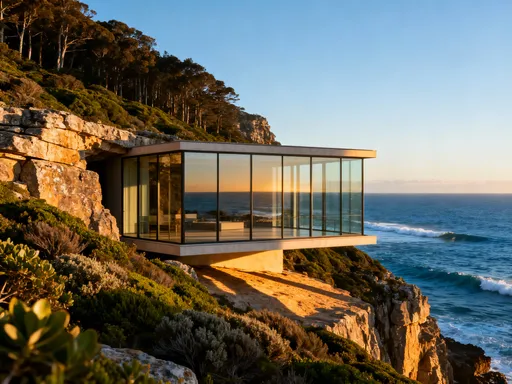
As one moves closer to the ocean, the architectural language shifts toward a more modern expression—clean lines, open spaces, and a deliberate emphasis on transparency. In coastal enclaves like Plettenberg Bay and Knysna, a new generation of homes embraces what can be called ‘coastal contemporary’ design. These structures prioritize views, natural light, and seamless transitions between indoor and outdoor living. Floor-to-ceiling glass walls dissolve boundaries, allowing residents to feel immersed in the surrounding forest and sea. Elevated decks, sliding glass doors, and cantilevered balconies extend living spaces into the landscape, creating homes that function as observation points for nature’s ever-changing drama.
Yet, this aesthetic is not merely about visual appeal; it is deeply functional. Architects design with the coastal climate in mind, selecting materials that resist salt corrosion and withstand strong winds. Aluminum framing, marine-grade stainless steel, and UV-protected glass are common choices. Overhanging eaves provide shade during summer months, while strategically placed windows channel cooling breezes through the interior—a passive cooling strategy that reduces reliance on air conditioning. In many cases, homes are raised on stilts or concrete piers to minimize environmental impact and protect against storm surges, especially in flood-prone areas near estuaries.
Boutique lodges in the region exemplify this approach. One notable example is a small retreat nestled above Keurbooms Beach, where a series of interconnected glass pavilions follow the contours of a dune. The design allows each room to capture unobstructed ocean views while maintaining privacy. Inside, natural wood finishes, neutral tones, and locally crafted furnishings create a warm, minimalist atmosphere. Another lodge in Knysna features a rooftop garden that blends into the surrounding canopy, reducing heat absorption and supporting local biodiversity. These spaces are not just places to sleep—they are experiences in environmental attunement, where every design decision enhances the connection between occupant and place.
Afro-Modern Fusion: Culture and Craft in Built Form
Beyond colonial and contemporary styles, a growing movement along the Garden Route embraces Afro-modern fusion—an architectural approach that honors indigenous Southern African traditions while meeting modern needs. This style draws inspiration from the rounded mud-walled dwellings of the Eastern Cape, the woven textures of Zulu basketry, and the earthy color palettes found in rural homesteads. The result is a design language that feels both ancient and innovative, where cultural memory is embedded in form and material. These buildings often feature organic shapes, hand-plastered walls, and thatched roofs made by skilled artisans using time-honored techniques.
What makes Afro-modern architecture particularly meaningful is the role of local craftsmanship. Artisans from nearby communities contribute to every stage of construction, from sculpting decorative ironwork to laying handmade clay tiles. In some eco-lodges near Tsitsikamma National Park, walls are finished with a natural ochre plaster mixed with local pigments, giving each structure a unique, earth-toned glow. Ceilings may be lined with woven reed panels, and door handles crafted from twisted branches, turning everyday details into expressions of cultural pride. This collaborative process not only ensures authenticity but also supports economic development in surrounding villages.
Community centers and cultural lodges are among the most powerful examples of this style. One such building, located just outside Nature’s Valley, was designed as a gathering space for storytelling and traditional ceremonies. Its circular layout echoes the form of a homestead kraal, with a central fire pit symbolizing unity. Large overhangs protect against rain, while high clerestory windows allow hot air to escape, maintaining comfort without mechanical systems. Visitors are invited to experience not just the architecture, but the values it represents—harmony, resilience, and intergenerational knowledge. In a region often associated with tourism, Afro-modern fusion reminds us that architecture can be a vessel for cultural continuity.
Sustainable Structures: Building Lightly on a Fragile Coastline
The Garden Route’s natural beauty is also its greatest vulnerability. Coastal erosion, rising sea levels, and habitat fragmentation pose real threats, making sustainable building practices not just desirable but essential. In response, architects and developers have embraced green design principles that minimize environmental impact. Solar panels are now a common sight, powering homes and lodges with renewable energy. Rainwater harvesting systems collect and store water for irrigation and non-potable use, reducing strain on municipal supplies. Passive cooling techniques—such as thermal mass walls, cross-ventilation, and shaded courtyards—help maintain comfortable indoor temperatures without excessive energy use.
Off-grid cabins and eco-retreats demonstrate how low-impact living can be both comfortable and beautiful. One example is a cluster of tiny homes near Wilderness, built on screw piles to avoid disturbing the dune ecosystem. Constructed from recycled timber and insulated with sheep’s wool, these cabins blend into the fynbos landscape. Each unit includes composting toilets and solar lighting, allowing guests to experience nature with minimal footprint. Another project in the Tsitsikamma region uses shipping containers converted into stylish, modular living spaces. The metal exteriors are treated to resist corrosion, and green roofs planted with native succulents help regulate temperature and support pollinators.
Local regulations play a crucial role in guiding responsible development. Municipalities along the route enforce strict setback rules from the high-water mark, limit building heights in sensitive zones, and require environmental impact assessments for new construction. Conservation-minded developers often go beyond compliance, partnering with ecologists to restore degraded land and plant indigenous species. Some properties even participate in citizen science programs, monitoring bird populations or tracking water quality. These efforts reflect a broader shift in mindset—from seeing land as a resource to be exploited, to viewing it as a living system to be stewarded. Sustainable architecture, in this context, becomes an act of care.
Hidden Gems: Off-the-Beaten-Path Architectural Encounters
While the Garden Route is well-traveled, some of its most compelling architectural moments lie beyond the main tourist routes. These hidden gems offer intimate, authentic experiences that reveal the soul of the region. Near Nature’s Valley, a small chapel perched on a cliffside captures the morning light through stained glass made by local artists. Its simple stone walls and timber roof blend into the forest edge, creating a space of quiet contemplation. Though modest in size, the chapel serves as a spiritual anchor for hikers and residents alike, proving that meaningful architecture doesn’t require grand scale.
Another surprise awaits in a forest canopy near Sedgefield, where a community library is suspended among the trees. Accessed by a wooden walkway, the structure features large windows that frame the treetops, encouraging reading in the company of birdsong. Built from sustainably harvested pine and clad in corrugated metal, the design is both functional and poetic. Inside, bookshelves are arranged in a spiral, symbolizing the journey of knowledge. This is architecture that serves a purpose beyond shelter—it fosters connection, learning, and wonder.
Further east, a disused railway station in a small village has been transformed into a vibrant art space. Retaining its original platform and signage, the building now hosts rotating exhibitions by local painters, sculptors, and textile artists. The renovation preserved the station’s nostalgic charm while adapting it for contemporary use. Visitors can browse artwork, attend workshops, or simply sit on the old benches and watch the world go by. These kinds of projects highlight how architecture can revitalize communities, turning forgotten spaces into cultural hubs. For travelers seeking depth over spectacle, these offbeat sites offer a richer, more personal encounter with the Garden Route’s spirit.
Designing the Journey: How to Experience Architecture Mindfully on the Garden Route
To truly appreciate the architecture of the Garden Route, one must slow down and engage with intention. A self-drive itinerary allows flexibility to explore at your own pace, with key stops including Swellendam for Cape Dutch heritage, Oudtshoorn for Karoo-influenced design, and Plettenberg Bay for coastal contemporary homes. The best times to visit are during the shoulder seasons—September to November and March to May—when the light is soft, the crowds are thinner, and the vegetation is at its most vibrant. Early mornings and late afternoons offer ideal conditions for photography, with golden light accentuating textures and forms.
Accommodation choices can enhance your architectural experience. Consider staying at a restored Cape Dutch manor, a modern glass-fronted villa, or a handcrafted eco-lodge. Each offers a different lens through which to understand place-based design. Some guesthouses even offer guided tours of their construction methods or partnerships with local artisans, providing deeper insight into the making of the spaces you inhabit. For a truly immersive experience, book a stay in a treehouse or off-grid cabin, where design, nature, and simplicity converge.
When observing private homes or cultural buildings, practice respectful etiquette. Avoid trespassing, keep noise levels low, and ask permission before photographing people or sacred spaces. Many communities welcome visitors who show genuine interest, but it’s important to remember that these are lived-in environments, not museum exhibits. Supporting local businesses—such as craft markets, guided walking tours, or conservation initiatives—ensures that your presence contributes positively to the region.
In the end, the Garden Route is more than a collection of beautiful buildings. It is a living museum of design wisdom, where every roofline, window, and material choice reflects a deep conversation with nature. It invites us to reconsider what it means to build well—not just for comfort or status, but for harmony. As we face global challenges of climate change and cultural displacement, this coastal corridor offers quiet inspiration: that the most enduring structures are those that listen first, and build only after they understand.