You Won’t Believe What I Saw in Punakha
Hidden between misty Himalayan valleys, Punakha, Bhutan, offers views that feel almost unreal. I never expected such raw beauty—ancient monasteries perched on river confluences, golden rice fields stretching endlessly, and dzongs rising like fortresses from a forgotten era. This isn’t just sightseeing; it’s a soul-stirring encounter with nature and culture. What makes Punakha’s viewing experience truly special? Let me take you through the moments that left me speechless. From the first descent into the valley to the quiet hush of a morning walk through rice paddies, every moment here feels intentional, layered with meaning. The air carries the scent of wet earth and incense, and time moves differently—slower, deeper, more present. In a world that rushes from one highlight to the next, Punakha invites you to pause, to truly see.
The First Glimpse: Arriving in Punakha Valley
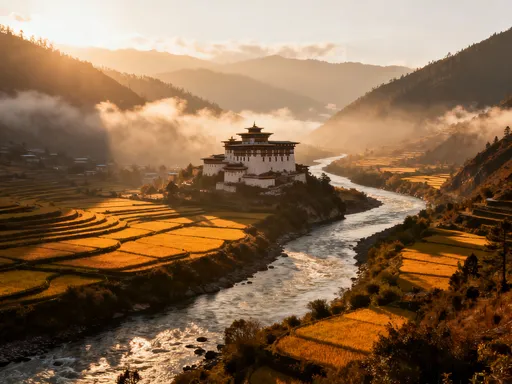
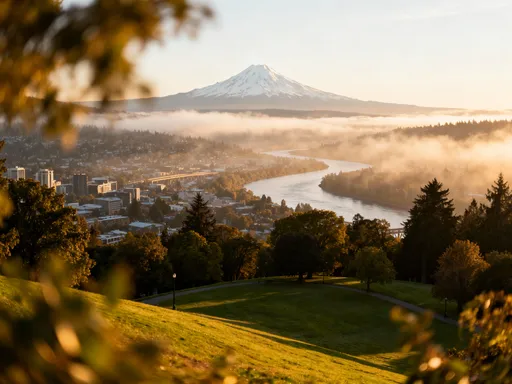
Descending from Dochula Pass, where prayer flags flutter against a backdrop of snow-capped peaks, travelers are met with a striking transformation. The crisp alpine air gives way to a gentler, subtropical warmth as the road winds down into the Punakha Valley. This shift is more than just climatic—it’s a passage from one world into another. At over 3,000 meters, Dochula offers panoramic views of the eastern Himalayas, but it is only when you reach Punakha, at a lower elevation of about 1,200 meters, that the landscape reveals its full richness. Terraced farms cling to the hillsides like stairways to the sky, their emerald tiers reflecting the season’s rhythm. The Mo Chhu and Pho Chhu rivers, one dark with glacial silt and the other clear and bright, converge in a sacred union known as the Puna Tsang Chhu. It is at this confluence that the valley opens, revealing the crown jewel of the region—Punakha Dzong, its white walls and golden roofs glowing in the sunlight.
This first view is not merely picturesque; it is symbolic. In Bhutanese tradition, the meeting of rivers represents harmony and balance, a spiritual threshold. The descent into Punakha mirrors a journey inward—away from the cold austerity of high mountain passes and into a warmer, more nurturing landscape. The valley has long served as the winter capital of Bhutan, a refuge for the central monastic body when the highlands become too harsh. This seasonal migration underscores the deep relationship between people and place. For the traveler, this initial glimpse sets a tone of reverence. It signals that this is not a destination to be rushed through, but one to be entered with awareness. The warmth, the greenery, the quiet flow of water—all speak of life sustained, of rhythms older than memory.
What makes this arrival so powerful is the contrast. One moment, you are surrounded by silence and snow; the next, you hear birdsong, smell blooming jasmine, and see farmers tending their fields with wooden plows. The visual shift is dramatic, but so is the emotional one. There is a sense of being welcomed, of descending into a living tapestry where nature and culture are inseparable. This is the first lesson Punakha teaches: that beauty is not just seen, but felt through change. The journey into the valley is a slow unveiling, a reminder that the most profound experiences often begin not with a climax, but with a transition.
Punakha Dzong: Where Architecture Meets Landscape
Standing at the junction of the Mo Chhu and Pho Chhu rivers, Punakha Dzong is one of Bhutan’s most iconic structures. Built in 1637 by Zhabdrung Ngawang Namgyal, the unifier of Bhutan, the dzong serves both as a religious center and an administrative hub. Its strategic placement was no accident—elevated on a spit of land where the two rivers meet, it was designed to be naturally protected while also symbolizing spiritual convergence. The dzong’s whitewashed walls rise in majestic tiers, crowned with golden spires that catch the morning and evening light. When the sun is low, its reflection shimmers in the water, creating a mirror image that seems almost too perfect to be real. This is not architecture imposed on the landscape, but architecture born from it—a structure that belongs, as if the valley itself shaped it over time.
The dzong’s grandeur lies not just in its size or craftsmanship, but in how it integrates with its surroundings. Unlike fortress-like buildings in other cultures, which dominate their environment, Punakha Dzong appears to emerge from the land. Its massive wooden pillars, hand-carved windows, and intricate murals are all crafted from local materials, reinforcing a deep respect for the natural world. Visitors often view the dzong from across the river, where the full façade can be appreciated. This vantage point, framed by willow trees and fluttering prayer flags, offers one of the most photographed scenes in Bhutan. Yet, the best time to visit is often overlooked—early morning, just after sunrise, when the mist still clings to the river and the crowds have not yet arrived. At this hour, the dzong seems to float, half in dream, half in reality.
Spring offers another exceptional viewing opportunity. When the jacaranda trees bloom in late March and April, their vibrant purple flowers contrast beautifully with the dzong’s white walls, creating a scene of rare elegance. The blooming season draws photographers and visitors from around the world, but even then, the atmosphere remains peaceful. There are no loud announcements or intrusive vendors—only the soft chime of temple bells and the quiet footsteps of monks moving through the courtyards. For those seeking a deeper connection, guided tours explain the dzong’s historical role, including its use as the seat of Bhutan’s government until the 1950s. To stand within its walls is to step into centuries of tradition, where every corridor and courtyard tells a story of faith, resilience, and cultural continuity.
The Suspension Bridge Perspective
One of the most memorable ways to approach Punakha Dzong is by crossing the long suspension bridge that spans the Mo Chhu River. This bridge, made of steel cables and wooden planks, sways gently with each step, adding an element of quiet adventure to the journey. For many visitors, especially those unaccustomed to such structures, the first few steps can be unnerving. But soon, the motion becomes rhythmic, almost meditative. Halfway across, the view opens in every direction—the rushing river below, the dzong ahead, and the valley stretching into the distance. It is from this moving platform that the landscape feels most alive. Unlike a static photograph or a distant viewpoint, the bridge offers a dynamic experience, where perspective shifts with every footfall.
The sensation of being suspended above the water heightens awareness. You hear the rush of the current, feel the breeze off the river, and notice how the light dances on the surface. The bridge is not just a means of crossing—it is a frame through which to see. From its center, the confluence of the two rivers becomes clearly visible, a natural phenomenon that holds deep spiritual significance. The Mo Chhu, darker and swifter, meets the lighter, calmer Pho Chhu, creating a visible line where the waters blend. This moment of merging is often interpreted as a metaphor for the union of wisdom and compassion in Buddhist thought. Standing above it, one cannot help but feel a sense of balance, of things coming together in harmony.
Families often walk the bridge together, children laughing as they test the sway, elders moving more cautiously but with quiet determination. Locals cross daily, carrying baskets or walking barefoot, their presence adding authenticity to the scene. There are no tolls, no tickets—just a simple path used by all. This accessibility is part of what makes the experience so powerful. It is not a tourist attraction in the commercial sense, but a functional, living part of the community. For the mindful traveler, crossing the bridge becomes a ritual of transition—a symbolic step from the outside world into the sacred space of the dzong. And because the bridge offers panoramic views in both directions, it encourages looking back as well as forward, reminding us that every journey involves both arrival and departure.
Beyond the Dzong: Hidden Viewpoints in the Countryside
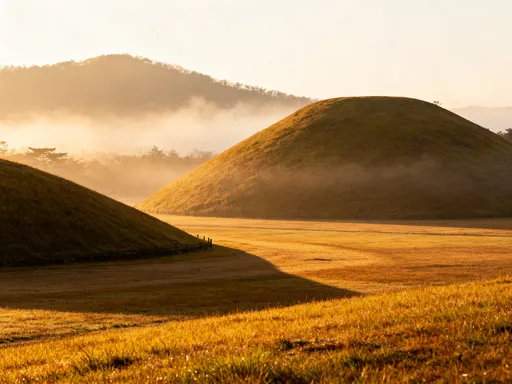
While the dzong is the heart of Punakha, the true soul of the valley lies in its quieter corners. Just beyond the main roads, narrow footpaths wind through rice fields, leading to small villages and hillside temples. These trails offer intimate glimpses into daily life—farmers bending over flooded paddies, women carrying bundles of firewood on their backs, children chasing ducks along irrigation channels. The scenery here is not staged for visitors; it unfolds naturally, shaped by seasons and routines passed down through generations. Walking these paths, one becomes part of the landscape rather than a spectator. The air smells of damp soil and ripening grain, and the only sounds are the rustle of leaves and the occasional call of a heron.
One particularly serene spot is a small temple perched on a ridge overlooking the valley. Reached by a ten-minute climb through a grove of fruit trees, it offers a panoramic view without the crowds. From here, the dzong appears in the distance, framed by pine-covered slopes. Monks sometimes come here to meditate, and visitors are welcome to sit quietly, absorbing the stillness. There are no admission fees, no gift shops—only a simple altar and a few wooden benches. This kind of quiet reverence is characteristic of Bhutan’s approach to sacred spaces. They are not museums, but living places of practice and reflection.
For those interested in photography, early morning or late afternoon provides the softest light, casting long shadows across the fields and illuminating the golden hues of ripening rice. Autumn, when the harvest is in full swing, is especially rewarding. Farmers work in teams, their movements synchronized like a dance. The sight of bundled rice stalks stacked in geometric patterns across the fields is both practical and poetic. Evening walks along the riverbanks offer another perspective, where the sky turns pink and orange, and the first stars appear above the mountains. These moments, unscripted and unhurried, often become the most cherished memories of a visit. They remind us that beauty is not always found in grand monuments, but in the quiet rhythms of ordinary life.
Seasonal Shifts: How Timing Changes the View
Punakha’s landscape is never the same twice. Each season paints the valley in a different palette, altering not just the colors but the very mood of the place. Spring, from March to May, is perhaps the most visually striking. Jacaranda trees burst into purple bloom, and fruit orchards come alive with white and pink blossoms. The air is warm but not yet humid, and the hillsides are lush and green. This is an ideal time for walking and photography, when the light is clear and the skies are mostly blue. The blooming season also coincides with the Punakha Drubchen festival, adding cultural vibrancy to the natural beauty.
Summer, from June to September, brings the monsoon. Rain falls frequently, sometimes heavily, transforming the valley into a misty, emerald dream. While some travelers avoid this season due to road conditions, those who come are rewarded with solitude and dramatic scenery. Waterfalls appear on cliffs where none were before, and the rivers swell, their currents turning powerful and loud. The humidity keeps the air thick, but also fertile—rice paddies grow rapidly, turning from pale green to deep jade. Umbrellas become essential, but so does patience. The rain teaches a different kind of viewing—one that values stillness, the sound of drops on leaves, and the sudden appearance of a rainbow over the dzong.
Autumn, from October to November, is widely considered the best time to visit. The rains have passed, the skies are clear, and the air is crisp. Rice fields turn golden, and farmers begin the harvest, their songs carrying across the valley. Temperatures are mild, making long walks comfortable. The light during this season has a special clarity, enhancing the contrast between the white dzong and the surrounding greenery. Winter, from December to February, brings cooler temperatures and fewer tourists. While the higher passes may be snow-covered, Punakha remains relatively mild. Morning fog often blankets the river, lifting slowly to reveal the dzong like a revelation. This is a time for quiet reflection, when the pace of life slows and the landscape feels more introspective.
Cultural Moments That Elevate the Scenery
The beauty of Punakha is not static. It comes alive during festivals, when centuries-old traditions fill the dzong’s courtyards with color, sound, and movement. The Punakha Drubchen, held annually in February, is one of the most significant events. For five days, the dzong becomes a stage for elaborate masked dances known as cham. Monks and laymen, dressed in brocade robes and intricate headdresses, perform ritual dances that tell stories of saints, demons, and the triumph of good over evil. Banners flutter from the rooftops, and the air fills with the scent of incense and butter lamps. Thousands gather to watch, not as tourists, but as participants in a living tradition.
These festivals transform the dzong from a historical monument into a vibrant center of spiritual life. The architecture, already impressive, becomes a backdrop for human expression—devotion, discipline, and joy. The dances are not performances in the Western sense; they are acts of meditation and protection, believed to bless the land and its people. For visitors, witnessing this is a rare privilege. There are no barriers, no reserved seats—just a shared space where everyone, local and traveler alike, stands in quiet awe. Children sit on their parents’ shoulders, elders chant softly, and cameras click gently, capturing moments that feel both ancient and immediate.
The emotional impact of such events cannot be overstated. They remind us that the most powerful views are not just visual, but experiential. To see the dzong lit by torchlight during the festival’s final night, surrounded by chanting monks and flickering flames, is to feel a deep connection to something larger than oneself. These moments elevate the scenery, turning stone and wood into vessels of meaning. They also reinforce Bhutan’s unique philosophy—that happiness and well-being are measured not by material wealth, but by cultural preservation and spiritual health.
Mindful Viewing: Slowing Down to See More
In a world of fast travel and instant images, Punakha offers a different way of seeing. True viewing here is not about checking off landmarks or capturing the perfect photo. It is about presence—about sitting quietly, watching how light moves across a wall, or noticing the way a farmer pauses to wipe his brow. This kind of attention is not passive; it is an act of respect. Bhutan’s concept of Gross National Happiness emphasizes well-being over speed, quality over quantity. In this spirit, the best way to experience Punakha is to slow down.
Simple practices can deepen this awareness. Carrying a journal to sketch a temple roofline or write down a moment of quiet can anchor memory in sensation. Sitting by the river for an hour, watching the water shift from silver to gold as the sun sets, teaches patience. Even silence—something rare in daily life—becomes a tool for perception. Without the noise of distraction, the ears pick up subtle sounds: the rustle of a bird in the reeds, the distant chime of a temple bell, the soft murmur of prayer.
Mindful viewing also means resisting the urge to always be moving. It is tempting to fill every hour with activity, to visit every site on a list. But in Punakha, some of the most powerful experiences happen in stillness. A morning fog that slowly lifts from the river, revealing the dzong piece by piece, is not a sight to be rushed. It is a process, a natural unveiling that mirrors the way understanding deepens over time. When travelers allow themselves to wait, to observe without agenda, they begin to see more—not just with their eyes, but with their whole being. This is the quiet revelation that Punakha offers: that to truly see is to be fully present, and to be present is to be alive.
Why Punakha Stays With You
Punakha does not reveal itself all at once. Its beauty unfolds gradually, like the opening of a lotus flower. It is in the first glimpse of the dzong from the valley floor, in the sway of the suspension bridge, in the laughter of children walking home from school. It is in the purple bloom of jacaranda trees and the golden stacks of harvested rice. But more than that, it is in the feeling that this place matters—not just as a destination, but as a reminder of how to live.
The viewing experience in Punakha is not passive. It is shaped by geography, yes, but also by culture, season, and the traveler’s own presence. It invites you to see not just the landscape, but the life within it. It teaches that beauty is not only in the grand and dramatic, but in the quiet, the ordinary, the enduring. In a world that often feels fragmented, Punakha offers coherence—a place where nature, architecture, and human tradition exist in harmony.
And so, Punakha stays with you. Not just as a memory of what you saw, but as a quiet voice reminding you to look more deeply, to move more slowly, to value experience over speed. It calls you to travel not just to places, but to presence. Where every glance becomes a moment of connection, and every view, a quiet revelation. In the end, it is not the photographs that endure, but the feeling—the sense that for a little while, you were truly there.