You Won’t Believe L.A.’s Hidden Architectural Gems – I Was Completely Shocked
Los Angeles isn’t just Hollywood and palm trees—its architecture tells a deeper story. From sleek modernist homes to bold Art Deco landmarks, the city’s skyline pulses with creative energy. I hit the streets to uncover the real L.A., one building at a time. What I found wasn’t just stunning—it was unexpected. This is more than a guidebook; it’s a personal journey through the soul of a city shaped by vision, culture, and daring design. Architecture here doesn’t just shelter people—it speaks to ambition, resilience, and the endless pursuit of reinvention. And for anyone willing to look beyond the surface, Los Angeles offers a visual feast that lingers long after the trip ends.
First Impressions: Beyond the Postcard L.A.
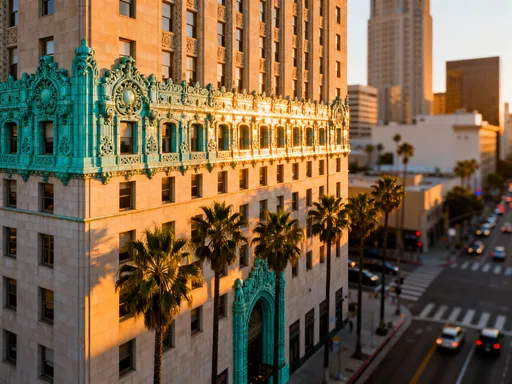
When most travelers think of Los Angeles, they picture sun-drenched beaches, celebrity sightings, and endless freeways lined with palm trees. The image is iconic, but it’s also incomplete. Beneath the glossy surface lies a city rich with architectural nuance, where every era has left its mark in brick, steel, and stucco. I learned this on a quiet morning walk through downtown, when I turned a corner and found myself face-to-face with the Eastern Columbia Building—a shimmering tower of turquoise terra cotta that seemed to glow under the California sun. Its intricate geometric patterns and stepped silhouette felt like stepping into a 1930s film noir. In that moment, I realized I had been seeing L.A. all wrong.
Architecture transforms the way we experience a city. It’s not just about aesthetics; it’s about storytelling. The buildings we pass reveal who lived here, what they valued, and how they dreamed of the future. In Los Angeles, this narrative is especially layered. The city grew rapidly in the early 20th century, drawing dreamers from across the country who wanted to build something new. Developers, artists, and industrialists shaped a skyline that defied convention, blending styles from across the world. As a result, L.A. became a living museum of architectural experimentation—where Spanish courtyards sit blocks away from glass-walled modernist homes, and Art Deco towers rise beside futuristic cultural centers.
What makes this architectural diversity so powerful is its accessibility. Unlike cities where grand buildings are reserved for the elite, Los Angeles spreads its design treasures across neighborhoods, often hiding in plain sight. A Craftsman bungalow in West Adams, a mid-century gem in the Hollywood Hills, or a restored Victorian in Angelino Heights—each tells a story of craftsmanship, community, and continuity. For the curious traveler, especially those who appreciate beauty with history, these structures offer a deeper connection to the city. They invite us to slow down, look up, and notice the details that define a place not by its fame, but by its character.
Art Deco Majesty: Stepping Back into Golden-Era Glamour
Downtown Los Angeles holds some of the finest Art Deco architecture in the United States, a legacy of the 1920s and 1930s when the city was booming with confidence and modernity. This was an era when architects embraced bold geometry, rich materials, and symbolic ornamentation to express progress and prosperity. Buildings like the Eastern Columbia, the Oviatt Building, and Los Angeles City Hall stand as testaments to that golden age, their façades alive with intricate carvings, metallic accents, and vertical lines that draw the eye skyward. The Eastern Columbia, completed in 1930, remains one of the most photographed structures in the city—its deep turquoise terra cotta tiles creating a striking contrast against the clear blue sky. The color, rare in urban architecture, was both a statement of individuality and a nod to the Aztec and Mayan motifs popular during the Deco era.
Inside these buildings, the craftsmanship continues. The Oviatt Building, once home to a luxury department store, features a lobby with marble walls, gilded elevators, and a ceiling painted with celestial motifs. The attention to detail is breathtaking—every surface designed to impress and inspire. These structures were not just functional; they were meant to elevate the everyday experience of city life. Even City Hall, completed in 1928, blends Deco stylings with a more restrained civic dignity, its 454-foot tower serving as a landmark visible from miles away. At night, when the buildings are softly lit, the downtown skyline takes on a cinematic quality, as if the city itself is performing its own history.
For visitors, the best time to explore these Art Deco masterpieces is early morning or late afternoon, when the sunlight enhances the textures and colors of the façades. A walking tour starting at the Eastern Columbia and moving west toward the Bradbury Building—another architectural gem with its ornate ironwork and skylit atrium—offers a perfect introduction. Along the way, you can pause at local coffee shops like Alfred Coffee on Broadway, where the blend of historic surroundings and modern café culture feels uniquely Los Angeles. Comfortable walking shoes are essential, and a camera is highly recommended—many of these buildings are best appreciated through the lens, where their intricate patterns and vertical rhythms become even more apparent.
Mid-Century Modern: Clean Lines and California Cool
If Art Deco reflects the optimism of early 20th-century urban growth, mid-century modern architecture embodies the postwar spirit of innovation and simplicity. In Los Angeles, this style found its ideal environment—sunny weather, expansive views, and a culture that embraced indoor-outdoor living. Two of the most iconic examples are the Stahl House (Case Study House #22) and the Eames House in Pacific Palisades. Designed in the 1950s as part of the Arts & Architecture magazine’s Case Study House program, these homes were intended to showcase affordable, functional, and beautiful living spaces for the modern American family. What they became were architectural landmarks that redefined residential design.
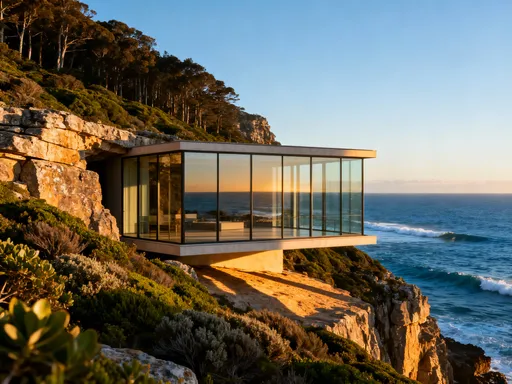
The Stahl House, perched above the Hollywood Hills, is perhaps the most photographed private residence in the world. Its dramatic cantilevered structure and floor-to-ceiling glass walls frame panoramic views of the Los Angeles Basin, turning the city itself into a living piece of art. I visited just before sunset, and as the sky shifted from gold to deep violet, the interior lights came on, creating a glowing glass box suspended in the hills. The effect was surreal—both intimate and monumental. While the home remains privately owned, the exterior is easily viewable from the public street, and the nearby lookout point on Woodrow Wilson Drive offers an unobstructed view for photography and quiet reflection.
The Eames House, located along the Pacific Coast Highway, takes a different approach. Charles and Ray Eames, legendary designers, built their home using prefabricated industrial materials, blending functionality with warmth. The structure features a steel frame, glass walls, and carefully curated interior spaces filled with art, textiles, and handmade objects. What makes the Eames House special is not just its design, but the life that unfolded within it—a creative sanctuary where work, family, and play coexisted seamlessly. Today, the house is preserved as a historic site, with limited public tours available through the Eames Foundation. These opportunities provide rare insight into the lives of two visionaries who helped shape modern design.
For travelers interested in mid-century modern architecture, a drive through neighborhoods like the Riviera or the Palisades offers countless examples of homes with flat roofs, open floor plans, and integration with nature. Many were designed by architects influenced by Richard Neutra, Rudolf Schindler, and John Lautner, whose work emphasized harmony between structure and environment. While some homes are private, their exteriors can be respectfully admired, and guided tours—such as those offered by the Los Angeles Conservancy—provide context and access to select sites. This architectural style, with its clean lines and human-centered design, continues to inspire homeowners and designers around the world.
Spanish Revival & Mediterranean Flair: Old-World Charm in the Sun
Long before modernism took hold, Los Angeles developers looked to the past to craft a romantic identity for the growing city. In the early 20th century, Spanish Colonial Revival and Mediterranean Revival styles became dominant, inspired by the architecture of Spain, Mexico, and Southern Europe. These designs—featuring red-tile roofs, stucco walls, arched doorways, and interior courtyards—were marketed as symbols of warmth, elegance, and Old World charm. Neighborhoods like Hancock Park, Pasadena, and parts of Beverly Hills became showcases for this aesthetic, where tree-lined streets are lined with homes that feel more like villas than suburban dwellings.
One of the finest examples is the Gamble House in Pasadena, designed in 1908 by the architectural firm Greene & Greene. Though often associated with the American Arts and Crafts movement, the Gamble House incorporates Mediterranean elements with Japanese influences, creating a unique fusion of styles. The exterior features heavy timber beams, handcrafted woodwork, and wide overhanging eaves, while the interior is a masterpiece of detail—mahogany paneling, leaded glass windows, and built-in furniture that blends form and function. What stands out most is the harmony between the house and its natural surroundings. A koi pond, lush gardens, and carefully placed windows create a sense of tranquility, as if the home were grown from the land rather than built upon it.
The Gamble House is open for guided tours, offering visitors a rare chance to experience early 20th-century domestic life in exquisite detail. But the Spanish Revival influence extends far beyond single landmarks. In neighborhoods like West Adams and Angelino Heights, walking tours reveal blocks of restored homes with ornate ironwork, tiled fountains, and shaded porches. These areas, once neglected, have seen renewed interest thanks to preservation efforts that honor their architectural heritage. For travelers, exploring these neighborhoods on foot or by bicycle offers a slower, more intimate way to experience Los Angeles—one that emphasizes craftsmanship, history, and community over speed and spectacle.
To make the most of this architectural journey, consider picking up a historic district map or using a self-guided tour app like *We Like L.A.* or *Architectural Foundation of Los Angeles* resources. These tools help identify key homes, provide historical context, and suggest optimal walking routes. Whether you’re drawn to the romance of a courtyard garden or the elegance of a wrought-iron balcony, the Spanish and Mediterranean styles of Los Angeles offer a timeless beauty that feels both grand and welcoming.
Contemporary Icons: Where Architecture Dares to Be Different
Los Angeles continues to push architectural boundaries in the 21st century, with bold new structures that challenge convention and redefine urban space. Two of the most striking examples are the Walt Disney Concert Hall and The Broad, both located in downtown’s cultural corridor. Designed by Frank Gehry, the Walt Disney Concert Hall opened in 2003 after decades of planning and fundraising. Its sweeping stainless steel curves reflect light in ever-changing patterns, creating a dynamic presence that shifts with the time of day. From certain angles, the building resembles a fleet of silver sails; from others, a blooming metallic flower. Inside, the concert hall is equally impressive, with warm wood interiors and acoustics praised by musicians and audiences alike.
The public reaction to Disney Hall was mixed at first—some found its form too radical, too futuristic for the cityscape. But over time, it has become one of L.A.’s most beloved landmarks, a symbol of artistic ambition and civic pride. The surrounding garden, designed by landscape architect Catherine Meyler, enhances the experience with native plants, winding paths, and quiet seating areas. It’s a place where locals and tourists alike come not just for performances, but for the architecture itself. The best photo opportunities are from the north side, where the curves are most dramatic, or at night, when the building is softly illuminated.
Just across Grand Avenue, The Broad, designed by Diller Scofidio + Renfro and opened in 2015, presents a different kind of innovation. Its honeycomb-like exterior, known as the “veil,” allows natural light to filter into the galleries while protecting the artwork. The effect is both porous and sculptural, as if the building breathes with the city around it. Inside, the museum houses a vast collection of contemporary art, with works by artists like Jeff Koons, Yayoi Kusama, and Jean-Michel Basquiat. Admission to the main collection is free, making it one of the most accessible cultural institutions in the city. Visitors often spend hours exploring the immersive installations, particularly Kusama’s Infinity Mirrored Room, which draws long lines but delivers a truly unforgettable experience.
Together, Disney Hall and The Broad represent a new era of architectural ambition in Los Angeles—one that values creativity, public engagement, and emotional impact. They are not just buildings; they are destinations that invite interaction, reflection, and wonder. For travelers, a visit to Grand Avenue offers a concentrated dose of the city’s artistic spirit. Nearby, cafés and outdoor seating areas provide space to rest and absorb the surroundings. These structures remind us that architecture is not static—it evolves, challenges, and inspires, just like the people who create and inhabit it.
Hidden Neighborhoods: Architectural Treasures Off the Beaten Path
Beyond the well-known landmarks, Los Angeles harbors quiet neighborhoods where architectural gems await discovery. West Adams, once home to wealthy industrialists in the early 1900s, is now a mosaic of Victorian, Craftsman, and Tudor Revival homes, many meticulously restored. Walking down its tree-lined streets, you’ll see homes with wraparound porches, stained glass transoms, and original woodwork—each with its own story of preservation and renewal. The neighborhood has become a model for historic revitalization, where long-time residents and new homeowners work together to maintain its character.
Another hidden gem is Angelino Heights, one of L.A.’s oldest residential districts. Here, Queen Anne-style Victorians with turrets, bay windows, and ornate trim stand side by side, creating a streetscape that feels transported from another century. The area is especially beautiful in the morning light, when the shadows accentuate the textures of wood and stone. The Los Angeles Conservancy offers seasonal walking tours that delve into the history of these homes and the families who built them. These tours are particularly popular with locals and design enthusiasts, offering a chance to connect with the city’s past in a personal and meaningful way.
Other neighborhoods worth exploring include Hancock Park, with its grand early 20th-century mansions, and the Palos Verdes Estates, where Mediterranean-style homes overlook the Pacific. These areas may not be on every tourist’s itinerary, but they offer a richer, more nuanced view of Los Angeles—one defined by craftsmanship, continuity, and community. For travelers seeking authenticity, a self-guided walking tour using a mobile app or printed map can turn an ordinary afternoon into a journey of discovery. The key is to move slowly, look closely, and appreciate the details that make each home unique.
Preservation efforts across these neighborhoods highlight a growing appreciation for architectural heritage. Organizations like the Los Angeles Conservancy and local historical societies advocate for responsible development, ensuring that progress doesn’t come at the cost of history. Their work reminds us that beauty and function can coexist, and that old buildings can adapt to modern life without losing their soul. For visitors, supporting these efforts—by taking tours, visiting historic sites, or simply respecting private property—helps sustain the city’s architectural legacy for future generations.
Why Architecture Makes Your Trip Unforgettable
At its core, travel is about connection—about understanding a place not just through its attractions, but through its essence. Architecture offers one of the most powerful ways to achieve that understanding. In Los Angeles, where the skyline is constantly evolving, the buildings tell a story of reinvention, diversity, and bold creativity. They reflect the city’s identity: experimental, inclusive, and always looking ahead. When you take the time to notice a hand-carved doorway, the curve of a staircase, or the way light filters through a stained glass window, you’re not just observing design—you’re engaging with history, culture, and human aspiration.
What makes architectural travel especially rewarding is its accessibility. You don’t need a museum ticket or a guided tour to appreciate it. All it takes is a willingness to look up, to pause, and to see the city from a new perspective. Whether you’re standing beneath the soaring curves of the Walt Disney Concert Hall or admiring a century-old Craftsman porch in West Adams, you’re participating in a quiet act of discovery. These moments add depth to your journey, transforming a simple visit into a meaningful experience.
For women in their 30s to 50s—many of whom balance family, work, and personal interests—travel that emphasizes beauty, history, and reflection can be especially fulfilling. Exploring architecture allows for a pace that feels natural, a way to recharge while still engaging with the world. It’s travel that nourishes the mind and the spirit, offering both inspiration and peace. And in a city like Los Angeles, where the surface can feel overwhelming, architecture provides an anchor—a way to find stillness, meaning, and connection.
So the next time you plan a trip, let architecture guide you. Let it lead you down quiet streets, into sunlit courtyards, and toward unexpected discoveries. Let it remind you that every city has layers, and that the most beautiful stories are often written in steel, stucco, and glass. Los Angeles reveals itself not in billboards or beaches, but in the details—the curve of a staircase, the glow of a neon sign, the quiet dignity of a century-old façade. By seeing the city through its buildings, we don’t just visit—we understand.