You Won’t Believe These Hidden Cultural Gems in Ho Chi Minh City
Ho Chi Minh City isn’t just about buzzing streets and pho stands—it’s a cultural playground hiding in plain sight. I stumbled upon quiet tea houses, indie art labs, and century-old theaters where tradition dances with modern life. These leisure spots don’t scream for attention, but they absolutely capture the soul of the city. If you're chasing authenticity beyond the guidebooks, this is where the real Vietnam reveals itself—one quiet courtyard, one shared laugh, one hand-painted book at a time.
The Pulse of Urban Culture: Why Ho Chi Minh City Surprises
At first glance, Ho Chi Minh City pulses with kinetic energy—motorbikes weaving through traffic, street vendors calling out orders, and construction rising block by block. Yet beneath this surface lies a deep cultural rhythm, shaped by centuries of history and continuously reimagined by its people. Once known as Saigon, the city carries layers of influence—Indigenous Vietnamese, French colonial, and modern global currents—all coexisting in surprising harmony. What sets Ho Chi Minh City apart is how culture is not confined to museums or festivals; it lives in daily life, in the way people gather, create, and celebrate.
Leisure spaces here are more than places to relax—they are vital threads in the city’s cultural fabric. Unlike in many global cities where tradition is preserved behind glass, in Ho Chi Minh City, it is actively lived and reshaped. Locals don’t visit cultural sites only on holidays; they engage with heritage through morning tai chi sessions, afternoon tea rituals, or evenings spent at independent art exhibitions. These moments aren’t staged for tourists; they are organic expressions of identity, resilience, and community.
For visitors, this means the opportunity to experience Vietnam not as a performance, but as a living, breathing reality. The city invites participation rather than passive observation. Whether it’s joining a spontaneous music circle in the park or browsing hand-stitched notebooks at a pop-up zine fair, the cultural experience is intimate and accessible. It’s a place where modernity doesn’t erase tradition but instead finds creative ways to carry it forward. This dynamic interplay is what makes Ho Chi Minh City so uniquely compelling.
Hidden Tea Houses: Where Time Slows Down
Amid the city’s relentless pace, tea houses offer sanctuaries of stillness. Scattered across District 3 and tucked near Tao Dan Park, these quiet retreats are where generations gather to sip slowly, speak softly, and simply be. Some are family-run establishments with wooden benches and steaming pots of lotus or jasmine tea; others are modern reinterpretations with minimalist design and curated tea tastings. What unites them is a shared reverence for the ritual of tea—a practice deeply woven into Vietnamese social life.
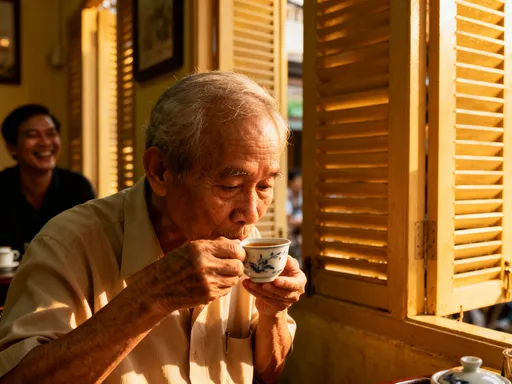
In Vietnam, tea is more than a beverage; it’s a symbol of hospitality, mindfulness, and connection. Elders often begin their day with a pot of green tea, sharing stories with neighbors or reflecting in silence. Young professionals, too, are rediscovering the calming power of tea, turning these spaces into informal meeting points for conversation and contemplation. I once sat beside an elderly man who had visited the same tea house every morning for over forty years. He spoke little English, but his gestures—pouring me a cup, pointing to the lotus blossom floating in the pot—said everything. In that moment, language didn’t matter; the ritual was the message.
Many of these tea houses are unmarked, known only to regulars or those willing to wander off main streets. Some are hidden in courtyards behind old villas, their entrances marked only by a small lantern or a wooden sign. Others operate from converted homes, where the owner doubles as host and storyteller. These spaces thrive on discretion and authenticity, offering a counterbalance to the city’s commercial bustle. For travelers, visiting one is not just about tasting tea—it’s about stepping into a slower, more intentional way of living.
Tea culture in Ho Chi Minh City also reflects broader values of respect and presence. It’s common to see people sitting alone, not out of loneliness, but as a form of self-care. Others come in pairs or small groups, engaging in quiet conversation without the distraction of phones or loud music. In a world that often glorifies speed, these tea houses remind us that some of the most meaningful moments happen in stillness. They are not attractions to check off a list, but invitations to pause and connect.
Indie Art Spaces: Creativity Beyond the Mainstream
While the city’s official art institutions draw crowds, a quieter revolution is unfolding in its independent art spaces. Places like The Factory Contemporary Arts Centre—the first of its kind in Vietnam—have become hubs for experimental work, showcasing artists who blend ancestral techniques with bold new forms. These venues are not polished galleries with velvet ropes; they are raw, open, and deeply engaged with the community. Visitors might find themselves standing beside the artist, discussing symbolism in a painting that reimagines folk tales through abstract brushwork.
What makes these spaces so powerful is their role in cultural dialogue. Young Vietnamese artists are increasingly turning to heritage as a source of inspiration, not as something to preserve in amber, but as a living language to reinterpret. You might see a sculpture made from recycled ao dai fabric, or a digital animation that brings village legends to life. These works don’t reject modernity; they use it to deepen the conversation about identity, memory, and change. For a generation navigating rapid urbanization, art becomes a way to ask: Who are we, and where do we come from?
Beyond exhibitions, these spaces host workshops, poetry readings, and zine fairs—intimate events that foster connection and creativity. I attended a weekend pop-up in a converted warehouse where local designers sold hand-printed notebooks, and visitors could try their hand at traditional calligraphy. A young woman taught me how to write my name in Chữ Nôm, an ancient script that blends Chinese characters with Vietnamese pronunciation. It was messy, imperfect, and utterly memorable. These moments are not about mastery; they’re about participation, about feeling the texture of culture with your own hands.
The rise of indie art spaces also reflects a shift in how culture is consumed. It’s no longer something handed down from institutions, but something co-created by communities. Open studio nights invite the public to witness the creative process, not just the final product. This transparency builds trust and belonging. For travelers, these spaces offer a rare chance to engage with Vietnam’s cultural future—not as outsiders, but as witnesses to a vibrant, evolving story.
Colonial-Era Theaters and Cinemas: A Nod to the Past
Rising like jewels from the city’s architectural landscape, colonial-era theaters stand as elegant reminders of Ho Chi Minh City’s layered history. The Saigon Opera House, with its French Beaux-Arts façade and gilded interiors, is the most famous, but it is far from alone. Smaller venues, some converted from old cinemas or community halls, continue to host performances that bridge generations. These spaces are not frozen in time; they are alive, adapting to contemporary tastes while honoring their roots.
One of the most moving experiences a visitor can have is attending a cai luong performance—a form of traditional Vietnamese opera known for its emotive singing, elaborate costumes, and melodramatic storytelling. Unlike Western opera, cai luong is deeply accessible, often drawing from folk tales, historical dramas, or moral parables. The music swells with soulful melodies, accompanied by traditional instruments like the dan bau (monochord) and dan tranh (zither). I watched a performance in a modest theater near Ben Thanh Market, where grandparents brought grandchildren, and young couples sat side by side, captivated by the story of a loyal village girl who outwits a corrupt official.
What struck me was not just the artistry, but the audience’s engagement. People clapped at key moments, whispered translations to newcomers, and hummed along to familiar tunes. This was not passive entertainment; it was collective memory in action. The theater became a space of shared identity, where stories from the past resonated with present-day values of resilience, justice, and family.
Even outside of live performances, old cinemas offer a nostalgic window into Vietnam’s cultural evolution. Some, like the historic Galaxy Cinema or smaller neighborhood theaters, occasionally screen black-and-white Vietnamese classics from the 1960s and 70s. These films, often centered on rural life, wartime sacrifice, or romantic longing, are more than entertainment—they are cultural artifacts. Watching one with a local audience, hearing laughter at inside jokes or sighs at poignant scenes, creates a quiet sense of belonging. These venues remind us that culture is not only preserved in grand gestures, but in the simple act of gathering to share a story.
Public Parks as Cultural Hubs
In a city that never fully sleeps, public parks serve as vital lungs—spaces where nature, movement, and community converge. Tao Dan Park, 30/4 Park, and Nguyen Van Troi Park are not just green oases; they are dynamic cultural stages where daily life unfolds in rhythm and color. At dawn, the air fills with the slow, flowing movements of tai chi practitioners, their arms rising and falling like waves. By mid-morning, retirees gather under banyan trees for chess matches or group singing, their voices blending with birdsong.
As the day turns to evening, the parks transform again. Dance circles form on paved clearings, where couples and friends move to everything from traditional folk music to upbeat pop remixes. These gatherings are spontaneous, inclusive, and joyfully unpolished. I once joined a group doing a simple line dance to a Vietnamese ballad, my steps clumsy but welcomed with laughter. No one cared about perfection; the point was participation, connection, shared joy.
These parks also serve as intergenerational bridges. Grandparents teach grandchildren traditional songs, while teenagers record short videos of elders performing folk dances. Musicians bring portable speakers and instruments, creating impromptu jam sessions that draw curious onlookers. In one corner of Tao Dan Park, a group of women rehearsed a lantern dance for an upcoming festival, their movements precise and graceful. A little girl watched intently, mimicking their gestures from the sidelines. In moments like these, culture is not taught in classrooms—it is absorbed through observation, imitation, and love.
For travelers, spending time in these parks offers a rare glimpse into authentic daily life. There are no admission fees, no guided tours—just the invitation to sit, watch, and perhaps join in. These spaces thrive on openness and warmth, reflecting a Vietnamese value of communal well-being. They remind us that culture is not something you consume; it’s something you live, moment by moment, in shared space and time.
Bookshops and Literary Cafés: Vietnam’s Quiet Intellectual Pulse
In an age of digital overload, Ho Chi Minh City’s bookshops and literary cafés offer a quiet rebellion—a celebration of the printed word and thoughtful conversation. Tucked into historic neighborhoods like District 1 and District 5, these spaces range from family-run stalls selling secondhand textbooks to cozy café-libraries with shelves floor to ceiling. Some are decorated with vintage lamps and handwritten quotes; others double as community centers, hosting poetry readings and book clubs.
What makes these places special is their role in preserving and revitalizing Vietnamese literature. In recent years, there has been a resurgence of interest in local authors, poets, and philosophers, especially among young people seeking connection to their roots. I visited a small bookstore near the Notre-Dame Cathedral that specializes in reprints of mid-20th-century Vietnamese poetry. The owner, a retired teacher, handed me a collection by Xuan Dieu, explaining how his romantic verses once captured the hopes of a generation. As I flipped through the pages, I noticed marginalia in pencil—notes from previous readers, adding layers of meaning over time.
Literary cafés, too, have become sanctuaries for reflection and exchange. One popular spot in District 3 combines a coffee menu with a rotating selection of Vietnamese novels and art books. Patrons sit for hours, reading, writing, or sketching in notebooks. On weekend evenings, the space hosts open mic nights where poets recite original work in Vietnamese and English. I attended one where a young woman read a poem about her grandmother’s garden in the Mekong Delta—simple words, but delivered with such sincerity that the room fell silent.
These spaces are more than retail outlets; they are acts of cultural stewardship. In a city hurtling toward the future, they insist on the value of memory, language, and slow thought. For visitors, browsing a local bookshop or sipping coffee in a literary café is not just a leisure activity—it’s a way to honor the intellectual soul of Vietnam. Each book, each poem, each conversation is a thread in the ongoing story of a people who value wisdom as much as warmth.
Navigating Culture with Respect and Curiosity
Exploring these hidden cultural gems requires more than a map—it demands mindfulness. For travelers, the most meaningful experiences come not from ticking off destinations, but from approaching each space with respect and genuine curiosity. Simple gestures go a long way: removing shoes before entering a tea house, speaking softly in galleries, or asking permission before photographing people. These acts of consideration are deeply appreciated and often lead to warmer, more authentic interactions.
Dress modestly when visiting cultural or religious sites—covering shoulders and knees is a sign of respect. In theaters or parks, follow local cues: if everyone is sitting quietly, avoid loud conversations. When attending performances or workshops, arrive on time and stay for the full experience. These spaces are not entertainment venues in the Western sense; they are community gatherings with their own rhythms and expectations.
The best times to visit are early morning or late afternoon, when temperatures are cooler and locals are most active. Tao Dan Park comes alive at sunrise; indie art spaces often host events on weekend evenings. Public transportation is efficient, but walking or cycling allows for deeper discovery. Renting a bicycle or joining a guided walking tour can lead you to places you might otherwise miss.
While English is spoken in tourist areas, learning a few Vietnamese phrases—like “Xin chào” (hello), “Cảm ơn” (thank you), or “Cho tôi xem” (may I see)—can open doors and hearts. Many locals appreciate the effort, even if your pronunciation is imperfect. Above all, slow down. Let yourself linger in a courtyard, sit through an entire tea session, or re-read a poem in a quiet corner. Culture reveals itself not in haste, but in presence.
Conclusion
Ho Chi Minh City’s true magic lies not in its skyline or speed, but in the quiet corners where culture breathes. These leisure venues—modest, unpolished, deeply human—offer a rare chance to experience Vietnam as it lives today: proud, adaptive, and full of quiet joy. By choosing to explore them, travelers don’t just see a destination—they become part of its ongoing story. Each shared cup of tea, each moment of silent appreciation in a gallery, each smile exchanged in a park, adds a small but meaningful thread to the fabric of connection. In a world that often feels disconnected, Ho Chi Minh City reminds us that culture is not something to be consumed, but something to be lived, shared, and carried forward—one quiet, authentic moment at a time.